
Winter · 3 min
Indoor bonsai: what nobody tells you
No bonsai lives well indoors all the time. Which species can spend winter under cover and how to do it without weakening them.
“Indoor bonsai” is one of the most common searches, and one of the great misunderstandings about bonsai. No tree lives well indoors all the time. A bonsai is a tree, and trees need the light, air and temperature changes of the outdoors. What does exist are tropical species that can spend winter under cover because they would not survive the cold. This guide explains the difference and how to do it well.
Why there is too little light indoors
Our eyes adjust so we do not notice, but the light inside a house is a small fraction of the light outside. As a rough order of magnitude:
| Place | Approximate light |
|---|---|
| Outdoors in full sun | 50,000–100,000 lux |
| Outdoors in shade | 10,000–20,000 lux |
| Next to a very bright window | 2,000–10,000 lux |
| Two or three metres from the window | Under 1,000 lux |
In low light the tree cannot make enough energy: shoots stretch and stay weak, leaves grow large and pale, and over time it loses vigour and attracts pests. Central heating also dries out the air and the soil.
Species that can spend winter indoors
These are tropical and subtropical species that cannot take the cold. They all do better outdoors from May to October, and only come in once nights drop below 12 °C:
| Species | How it copes indoors |
|---|---|
| Ficus retusa and ginseng ficus | The most tolerant. They drop leaves when brought in, then adapt |
| Portulacaria | Very tolerant with a sunny window |
| Fukien tea | Needs plenty of light and humidity; dislikes change |
| Serissa | The most delicate: drops leaves at any change |
| Bougainvillea | Survives under cover but will not flower without direct sun |
Species that should never be indoors
Temperate species such as Chinese elm, maples, junipers, pines and olive need winter cold to rest. Indoors they never go dormant, push weak growth at the wrong time and exhaust themselves within a year or two. Even when sold next to houseplants, they belong on a terrace or in a garden.
How to get a tropical through winter
- The brightest window in the house, ideally facing south, as close to the glass as possible.
- Away from radiators and warm draughts. Dry air does the most damage to the leaves.
- A humidity tray of gravel and a finger of water under the pot, without the pot touching the water.
- Less water. With less light the tree drinks less: always check the soil before watering.
- No fertilizer, unless it keeps growing strongly.
- An LED grow light if you lack a bright window. About 20–30 cm from the tree, for around 12 hours a day, it makes a big difference.
- Turn the pot every week so it grows evenly.
When to take it outside
When nights stay above 15 °C, usually in May. Do it gradually: a few days in shade before moving into sun, because leaves formed indoors scorch in direct sunlight. The What to do this month page tells you when the time comes.
If it is already indoors and struggling
If it is dropping leaves, yellowing or growing long, weak shoots, the cause is almost always too little light or too much water. See the pages on leaf drop and yellow leaves. And if it is an outdoor species, the fix is simple: move it outside, gradually, to a sheltered spot on the terrace.
Species this applies to
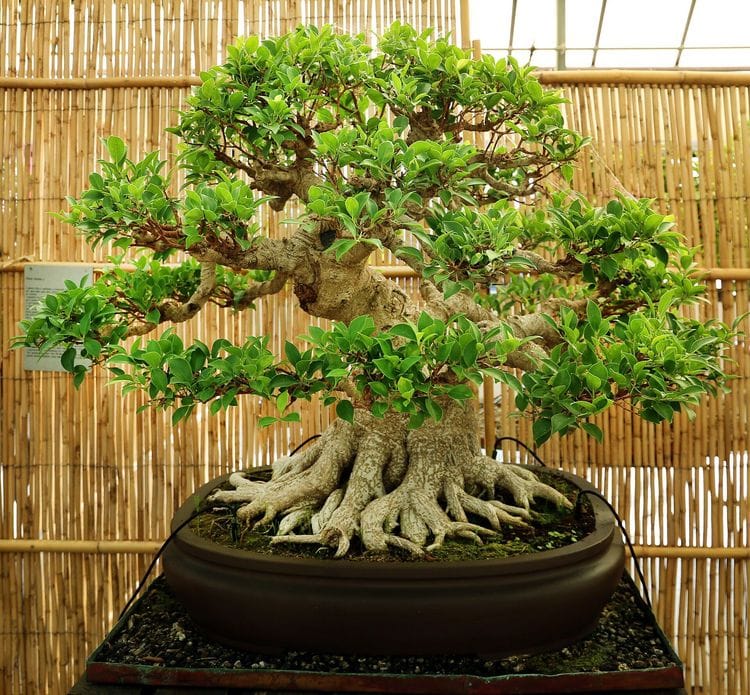
Photo: Sailko / Wikimedia Commons · CC BY-SA 4.0 Ficus retusa
Ficus microcarpa ‘Retusa’
BeginnerTropical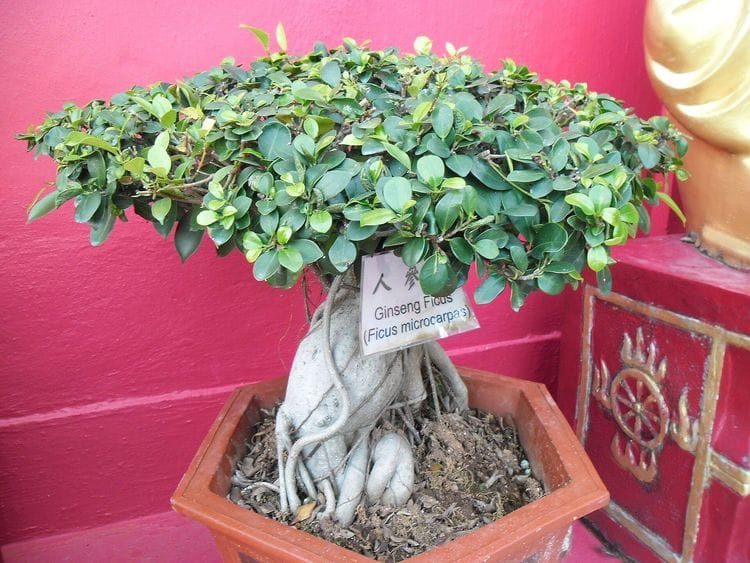
Photo: Earth100 / Wikimedia Commons · CC BY-SA 3.0 Ginseng ficus
Ficus microcarpa ‘Ginseng’
BeginnerTropical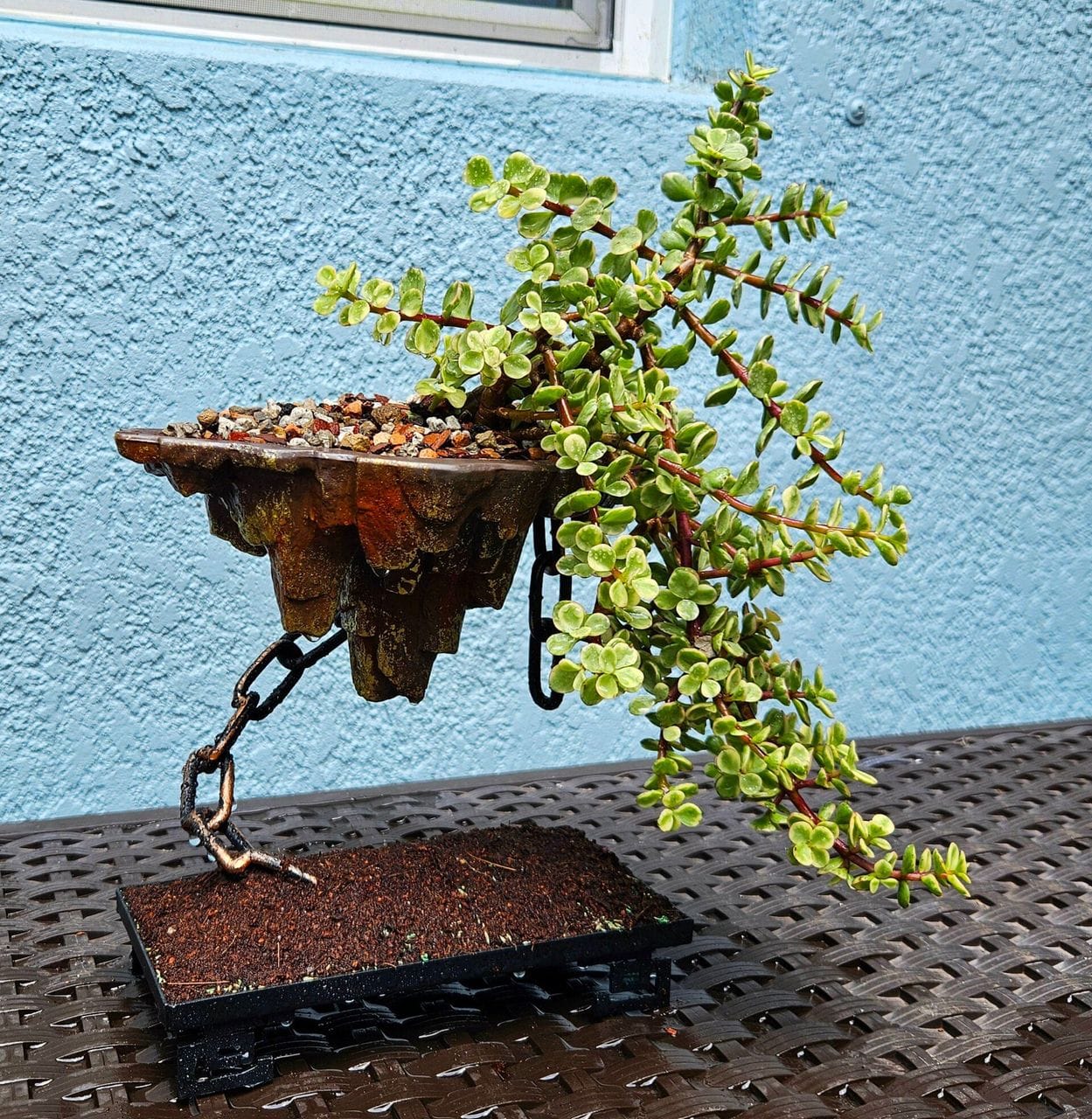
Photo: KevgRyan / Wikimedia Commons · CC0 Portulacaria
Portulacaria afra
BeginnerTropical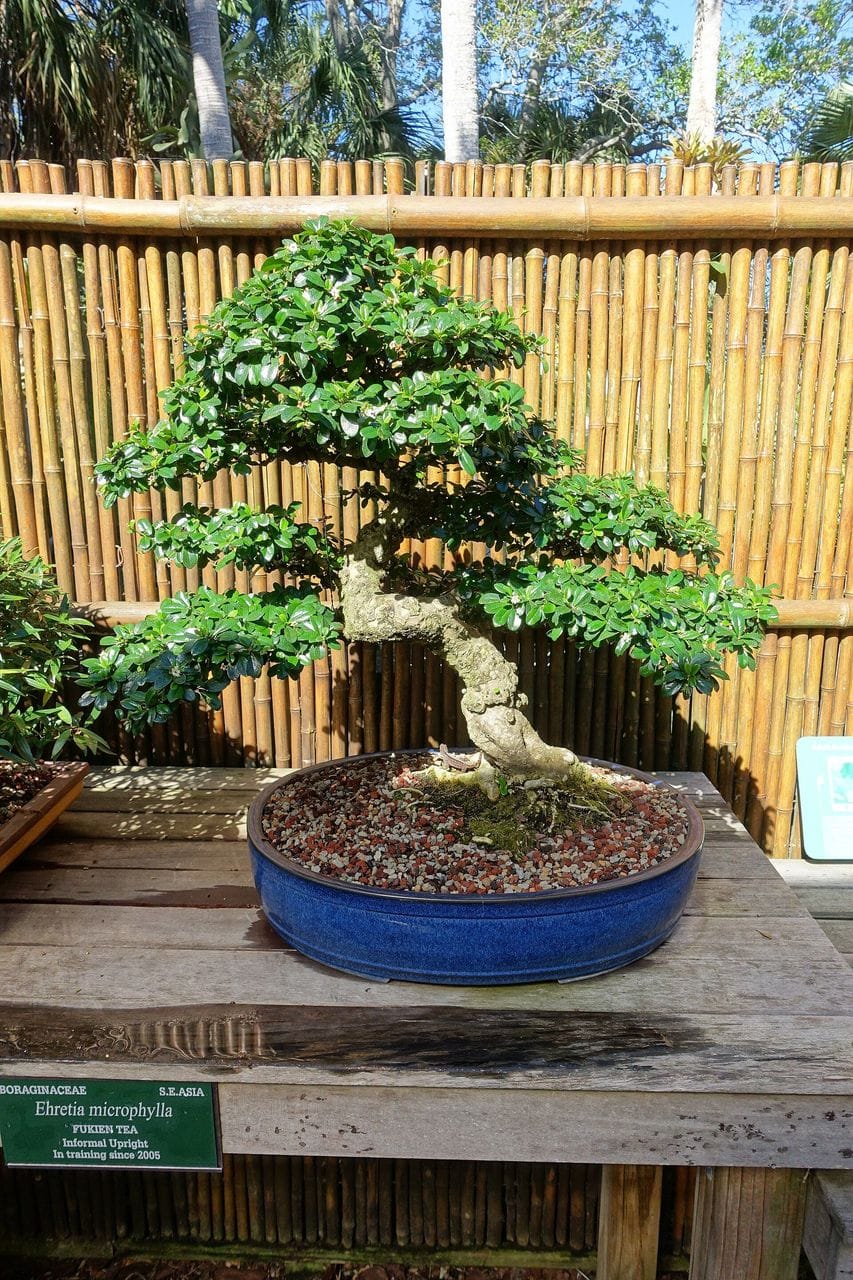
Photo: Daderot / Wikimedia Commons · CC0 Fukien tea
Carmona microphylla
AdvancedTropical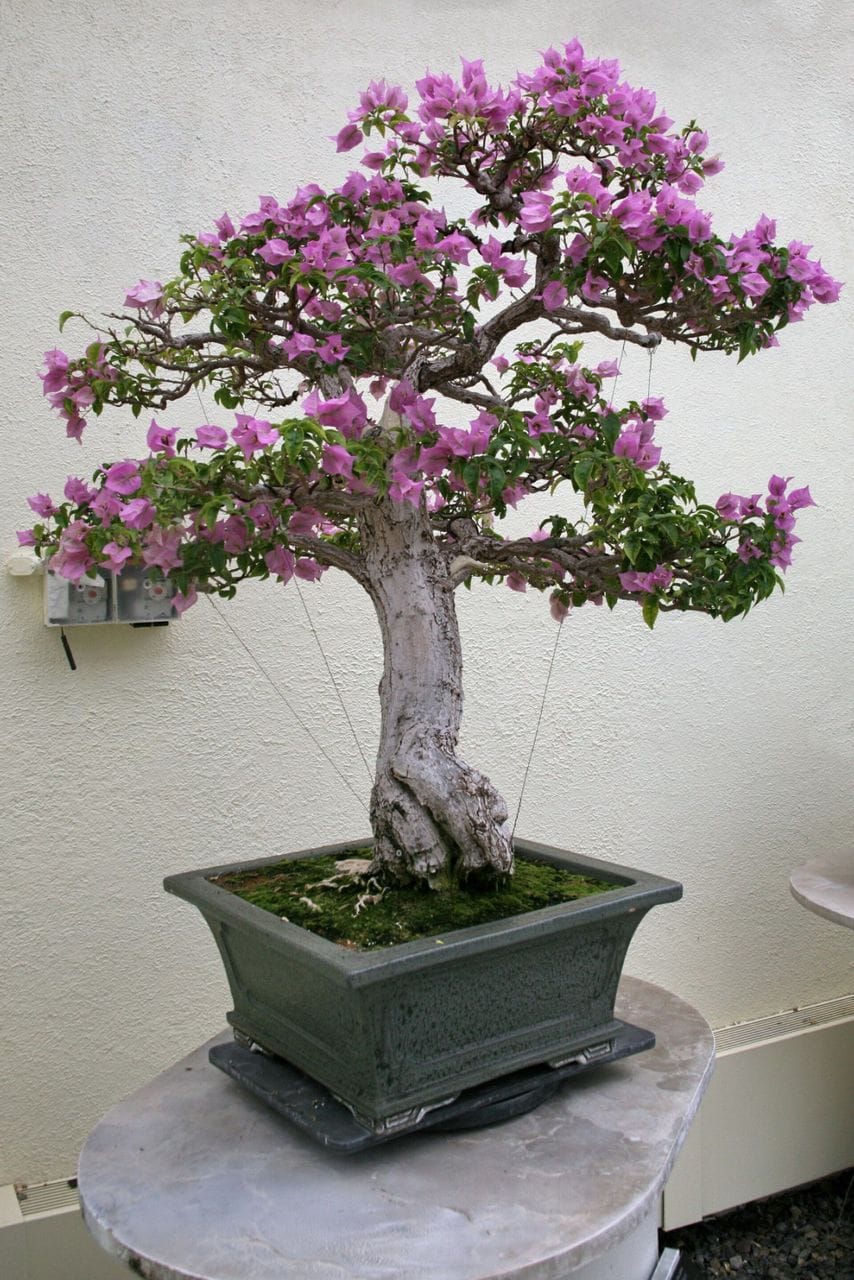
Photo: Cliff (Arlington, Virginia) / Wikimedia Commons · CC BY 2.0 Bougainvillea
Bougainvillea glabra
IntermediateTropical


What you need
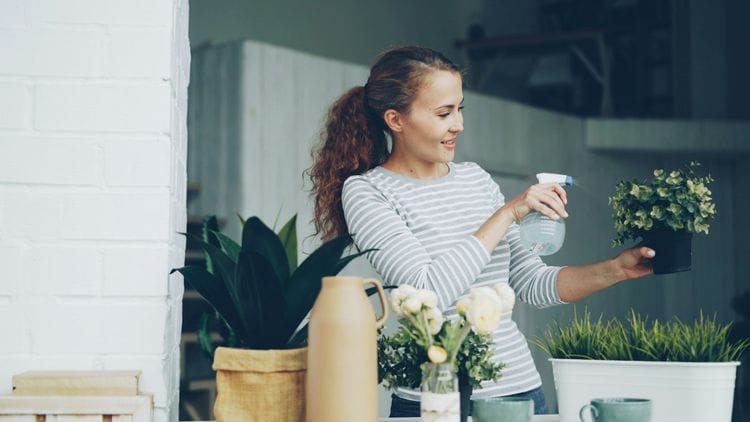
Photo: Vitaly Gariev / Unsplash · Unsplash License WateringBrass mister with fine nozzle
Humidity for tropicals while they overwinter indoors, when central heating dries the air.
- Capacity
- 500 ml
- Use
- Tropicals in winter

- Watering
Humidity tray with gravel
Raises humidity around tropicals while they overwinter indoors, without waterlogging the pot.
ForTropicals in winter · UseWith gravel and water