
Tropical · Evergreen
Ficus retusa
Ficus microcarpa ‘Retusa’ · Moraceae
ガジュマル · gajumaru
The most forgiving tropical to start with: it shrugs off missed waterings, buds back vigorously and grows characterful aerial roots.
Quick care facts
- Light
- Bright light, gentle sunOutside in partial shade during the warm season; indoors by the brightest window when it turns cool.
- Watering
- When the top 1 cm is dryWater thoroughly until it drains from the holes. Never leave water standing in the tray.
- Soil
- Akadama 50 · pumice 25 · lava 25Sifted 3–6 mm grain with no dust, so it drains within seconds.
- Feeding
- Every 2 weeks while growingFrom March to October, solid organic fertilizer. In winter, once a month at most.
- Pruning
- Let 6–8 leaves grow, cut back to 2Prune once a shoot has six to eight leaves. Seal cuts larger than 5 mm.
- Repotting
- Every 2 yearsIn May or June, above 20 °C. Remove no more than a third of the roots.
- Difficulty
- Beginner
- Climate
- 15–28 °CIt drops leaves below 10 °C. Keep it away from radiators and draughts.
About the species
Ficus retusa is how most people start with bonsai. Native to South-East Asia, it grows fast in warmth and light and tolerates beginner mistakes better than almost any other species.
Its wood heals well, so it accepts hard pruning, and in humid conditions it grows aerial roots that fuse with the trunk over the years. As a tropical species it lives outside while nights stay above 15 °C and is sheltered indoors, by the brightest window, when they drop below 12 °C.
Yearly calendar
What to do each month. In warm climates, bring spring tasks forward by about three weeks.
| Task | J | F | M | A | M | J | J | A | S | O | nowN | D |
|---|---|---|---|---|---|---|---|---|---|---|---|---|
| Feeding | ✓ | ✓ | ✓ | ✓ | ✓ | ✓ | ✓ | ✓ | ||||
| Pruning | ✓ | ✓ | ✓ | ✓ | ✓ | |||||||
| Pinching | ✓ | ✓ | ✓ | ✓ | ✓ | ✓ | ||||||
| Repotting | ✓ | ✓ | ||||||||||
| Defoliation | ✓ | |||||||||||
| Wiring | ✓ | ✓ | ✓ | ✓ |
Calendar for the northern hemisphere.
Common problems
SymptomIt suddenly drops lots of leaves
It is almost always a change of position or a cold draught. Keep it in one bright spot, skip fertilizer for three weeks and it will bud back.
SymptomSoft, yellow leaves
Overwatering or soil that does not drain. Check that water runs out of the holes within seconds and water only when the top centimetre is dry.
PestWhite cottony blobs on the branches
That is mealybug. Remove it with a cotton bud soaked in alcohol and spray insecticidal soap every seven days for three weeks.
SymptomSticky leaves
It is honeydew from aphids or scale. Rinse the canopy with lukewarm water and check the undersides of the leaves.
Seeing a different symptom?Diagnose by symptom
What we use with Ficus retusa
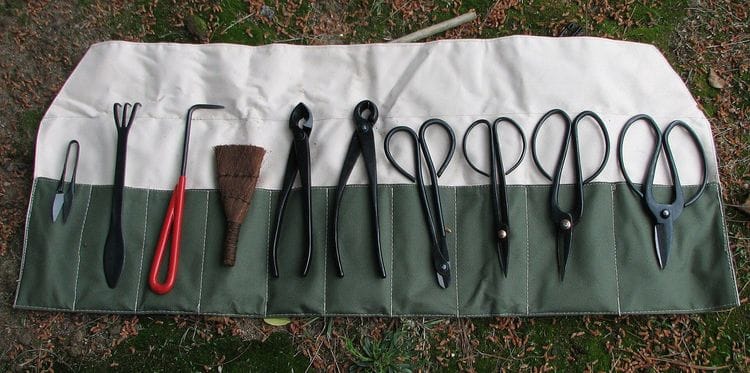
Photo: Ragesoss / Wikimedia Commons · CC BY-SA 3.0 ToolsCarbon steel concave cutter · 205 mm
Its curved blades cut the branch flush with the trunk. If you buy just one tool, make it this one.
- For
- Branches up to 12 mm
- Level
- All
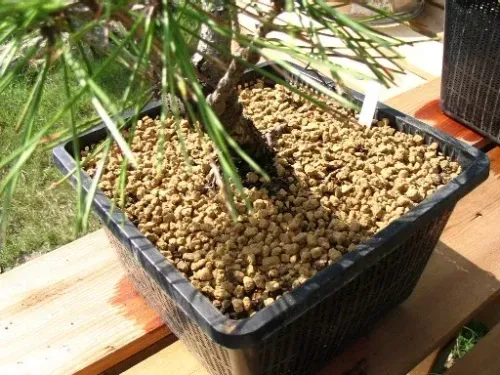
Photo: Globalist1789 / Wikimedia Commons · Public domain SoilHard-grade akadama · 2–5 mm
The base of nearly all our mixes: it holds water without waterlogging and changes colour as it dries.
- Grain
- 3–6 mm
- Mix
- 50–70 % with pumice

Photo: Vitaly Gariev / Unsplash · Unsplash License WateringBrass mister with fine nozzle
Humidity for tropicals while they overwinter indoors, when central heating dries the air.
- Capacity
- 500 ml
- Use
- Tropicals in winter

