
Tropical · Evergreen
Portulacaria
Portulacaria afra · Didiereaceae
A succulent that behaves like a tree: it forgives missed waterings, roots from any cutting and grows fast in the sun.
Quick care facts
- Light
- Lots of sunFull sun in the warm season. In low light, long internodes and big leaves.
- Watering
- Sparse, let it dryWater when the soil is completely dry. In winter, hardly at all.
- Soil
- Pumice 50 · akadama 30 · lava 20Very mineral and free-draining, like a cactus mix.
- Feeding
- Monthly while growingSucculent fertilizer from April to September.
- Pruning
- Prune freely in summerIt buds from anywhere. Let large cuts dry.
- Repotting
- Every 2–3 yearsIn warmth, May or June. Wait a week before watering.
- Difficulty
- Beginner
- Climate
- Above 5 °CNo frost tolerance. Overwinter indoors, bright and dry.
About the species
Portulacaria (dwarf jade or elephant bush) is a South African succulent with fleshy leaves and a reddish trunk. It stores water in its trunk and leaves, so it tolerates long dry spells.
It is ideal for beginners: it grows fast in warmth, buds back after any pruning and propagates easily from cuttings. Its weak spot is damp cold, so it overwinters indoors and almost dry.
Yearly calendar
What to do each month. In warm climates, bring spring tasks forward by about three weeks.
| Task | J | F | M | A | M | J | J | A | S | O | nowN | D |
|---|---|---|---|---|---|---|---|---|---|---|---|---|
| Feeding | ✓ | ✓ | ✓ | ✓ | ✓ | ✓ | ||||||
| Pruning | ✓ | ✓ | ✓ | ✓ | ✓ | ✓ | ||||||
| Repotting | ✓ | ✓ | ||||||||||
| Wiring | ✓ | ✓ | ✓ | ✓ | ||||||||
| Winter protection | ✓ | ✓ | ✓ | ✓ | ✓ |
Calendar for the northern hemisphere.
Common problems
SymptomSoft trunk and wrinkled leaves
Rot from watering in the cold. Cut away soft parts, let it dry and water much less in winter.
SymptomLong, weak branches
Lack of light. Move it into the sun as soon as frost risk is over.
PestCottony blobs in the leaf axils
Mealybugs. Cotton bud with alcohol and insecticidal soap.
Seeing a different symptom?Diagnose by symptom
What we use with Portulacaria
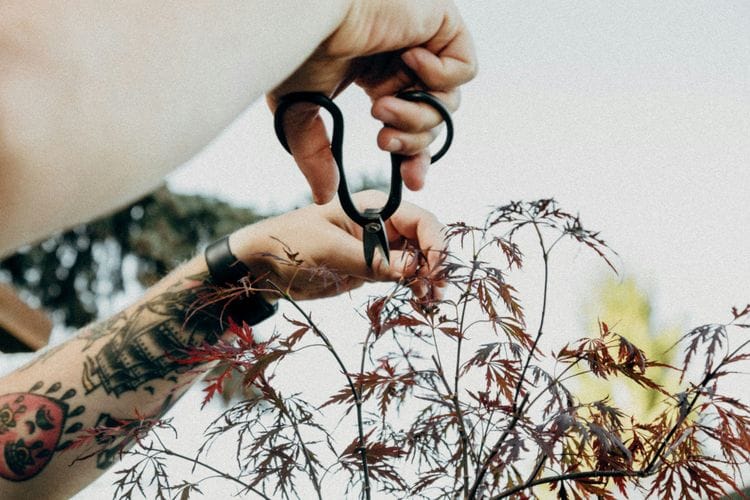
Photo: Priscilla Du Preez / Unsplash · Unsplash License ToolsLong-handle bonsai scissors
For pinching and trimming fine shoots inside a dense canopy without damaging nearby leaves.
- For
- Shoots and leaves
- Level
- All
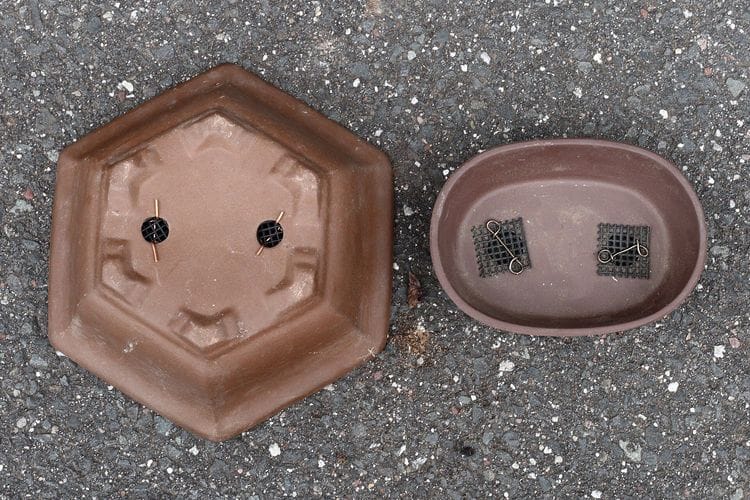
Photo: Ragesoss / Wikimedia Commons · CC BY-SA 3.0 PotsTraining pot with mesh base
Sturdy plastic with a mesh base: airy roots and fast growth while the tree develops.
- Material
- Plastic
- For
- Developing trees


- Soil
Pumice · 3–6 mm
Light, porous and stable: it brings drainage and air to the mix. The second base of nearly all our soils.
Grain3–6 mm · Mix20–50 %