
Temperate · Deciduous
Chinese elm
Ulmus parvifolia · Ulmaceae
アキニレ · akinire
Tiny leaves, fine branching and a toughness that survives forgetfulness. It lives outside all year and copes well with mild winters.
Quick care facts
- Light
- Sun or partial shadeOutdoors all year. In high summer it appreciates afternoon shade.
- Watering
- Often in summerNever let the soil dry out completely. In July it may need watering every day.
- Soil
- Akadama 60 · pumice 20 · lava 20A mineral mix with good water retention for hot days.
- Feeding
- Every 2 weeksFrom March to October. Reduce the dose in high summer above 32 °C.
- Pruning
- Let 4–5 leaves grow, cut back to 1–2Structural pruning happens at the end of winter, before the buds open.
- Repotting
- Every 2 yearsAt the end of winter, when the buds start to swell.
- Difficulty
- Beginner
- Climate
- Down to −10 °CIt tolerates moderate frost in its pot; shelter it from icy wind.
About the species
The Chinese elm is probably the most versatile species to start with. Its leaves are tiny, it buds back easily after every pruning and it builds very fine ramification in a few years.
It is deciduous, although in mild climates it often keeps some of its leaves through winter. It lives outside in full sun or partial shade, protected only from hard frosts.
Yearly calendar
What to do each month. In warm climates, bring spring tasks forward by about three weeks.
| Task | J | F | M | A | M | J | J | A | S | O | nowN | D |
|---|---|---|---|---|---|---|---|---|---|---|---|---|
| Feeding | ✓ | ✓ | ✓ | ✓ | ✓ | ✓ | ✓ | ✓ | ||||
| Pruning | ✓ | ✓ | ||||||||||
| Pinching | ✓ | ✓ | ✓ | ✓ | ✓ | ✓ | ||||||
| Repotting | ✓ | |||||||||||
| Wiring | ✓ | ✓ | ✓ | ✓ | ||||||||
| Winter protection | ✓ | ✓ | ✓ |
Calendar for the northern hemisphere.
Common problems
SymptomIt drops its leaves in autumn
That is normal: it is deciduous. It sheds in autumn and buds again in spring. Do not overwater while it is bare.
DiseaseBlack spots on the leaves
Usually a fungus encouraged by humidity without airflow. Remove affected leaves, isolate the tree and water the soil only.
PestLeaves eaten with holes
Typical of the elm leaf beetle. Check the undersides of the leaves in May and remove larvae by hand; for heavy infestations use a pyrethrin-based insecticide.
Seeing a different symptom?Diagnose by symptom
What we use with Chinese elm
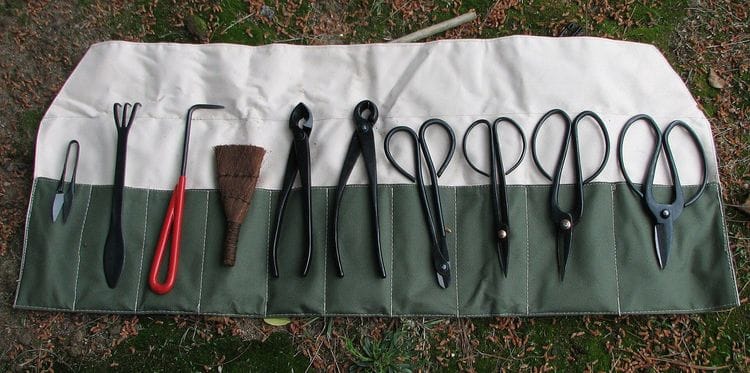
Photo: Ragesoss / Wikimedia Commons · CC BY-SA 3.0 ToolsCarbon steel concave cutter · 205 mm
Its curved blades cut the branch flush with the trunk. If you buy just one tool, make it this one.
- For
- Branches up to 12 mm
- Level
- All
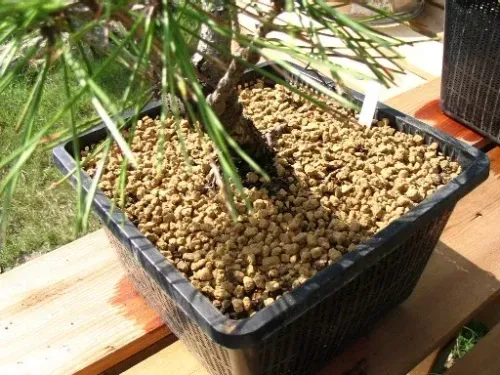
Photo: Globalist1789 / Wikimedia Commons · Public domain SoilHard-grade akadama · 2–5 mm
The base of nearly all our mixes: it holds water without waterlogging and changes colour as it dries.
- Grain
- 3–6 mm
- Mix
- 50–70 % with pumice
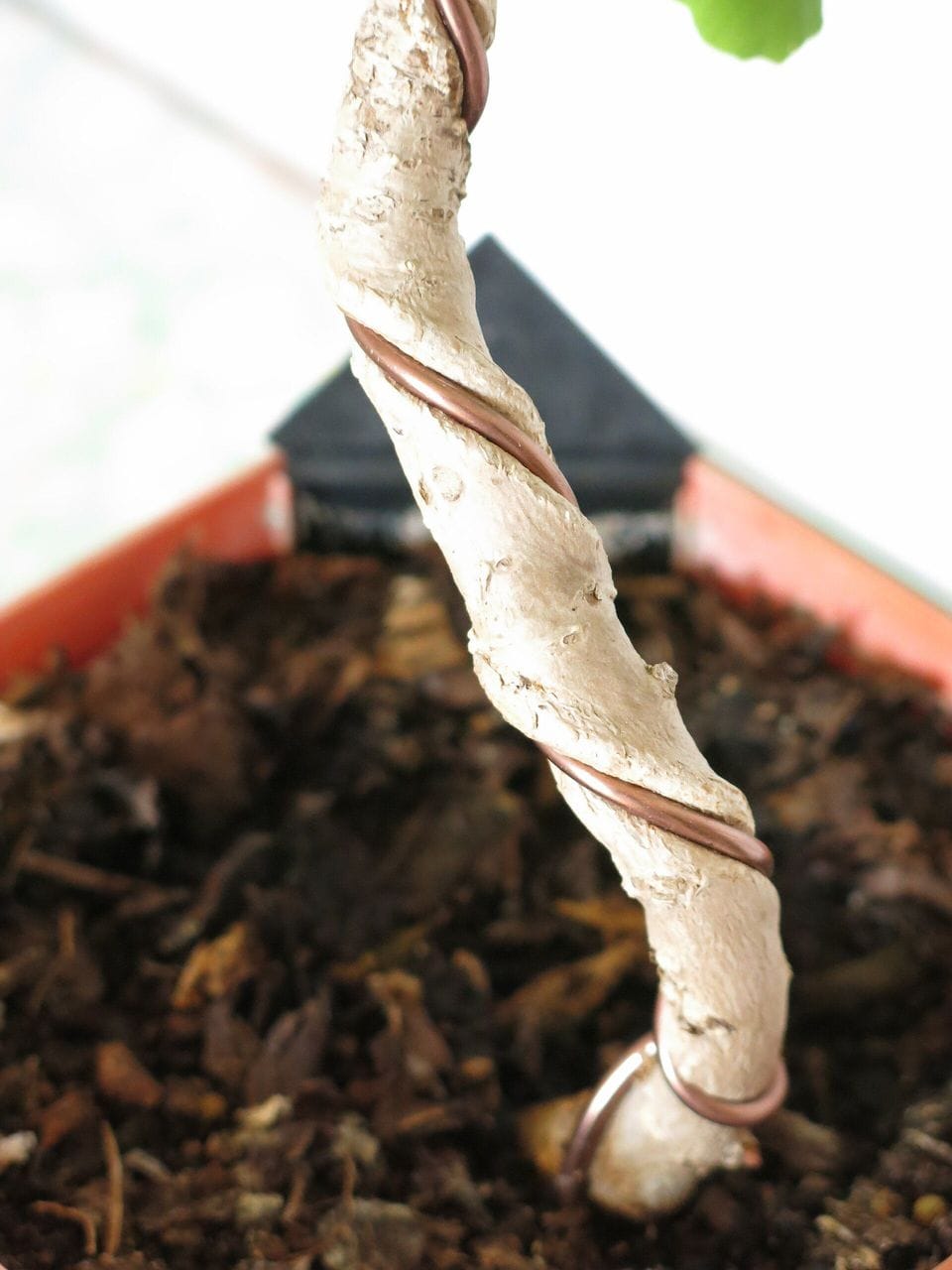
Photo: Tangopaso / Wikimedia Commons · Public domain WiringAnodized aluminium wire · several gauges
Soft and easy to remove. A 1 to 4 mm set covers nearly every branch of a young tree.
- Gauges
- 1 · 1.5 · 2 · 3 · 4 mm
- Use
- Deciduous and conifers

