Root rot
The most serious problem and the quietest: dark, soft roots from too much water. How to spot it and rescue the tree.
Root rot is the most serious problem and the quietest: by the time the canopy shows it, the roots have been suffering for weeks. Catching it early makes the difference between saving the tree and losing it.
How to recognise it
- The tree loses vigour and its leaves yellow or wilt even though the soil is wet.
- The soil takes days to dry, has green algae on the surface or smells stale.
- When you lift the tree out, the roots are dark, soft and fall apart when touched. Healthy roots are pale and firm.
- On a ginseng ficus, the bulb goes soft at the base.
Most likely causes
- Constant overwatering, watering by habit instead of by need.
- The wrong soil: potting compost, or akadama so broken down that it no longer drains.
- A pot without drainage, blocked holes, or a saucer of water under the pot.
- Soil fungi (such as Phytophthora or Pythium) that attack suffocated roots.
What to do now
- Stop watering until the top layer of soil dries.
- If the tree keeps getting worse, take it out of the pot, even if it is not the ideal season. This is an emergency.
- Remove the old soil and cut away all the rotten roots back to pale, firm tissue.
- Plant in fresh, very free-draining mineral soil (more pumice and lava than usual) and, if you can, in a slightly smaller pot.
- Keep it in shade, out of the wind, and water very little: only when the surface is dry.
- Do not feed until you see strong new shoots, usually after one or two months.
How to stop it coming back
Sifted mineral soil, watering guided by the soil and regular repotting. Read the watering and repotting guides.
Profiles of the affected species
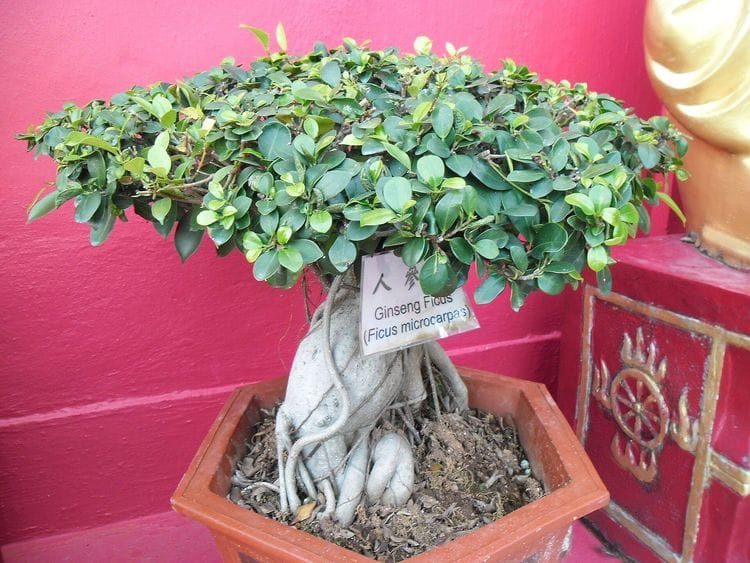
Photo: Earth100 / Wikimedia Commons · CC BY-SA 3.0 Ginseng ficus
Ficus microcarpa ‘Ginseng’
BeginnerTropical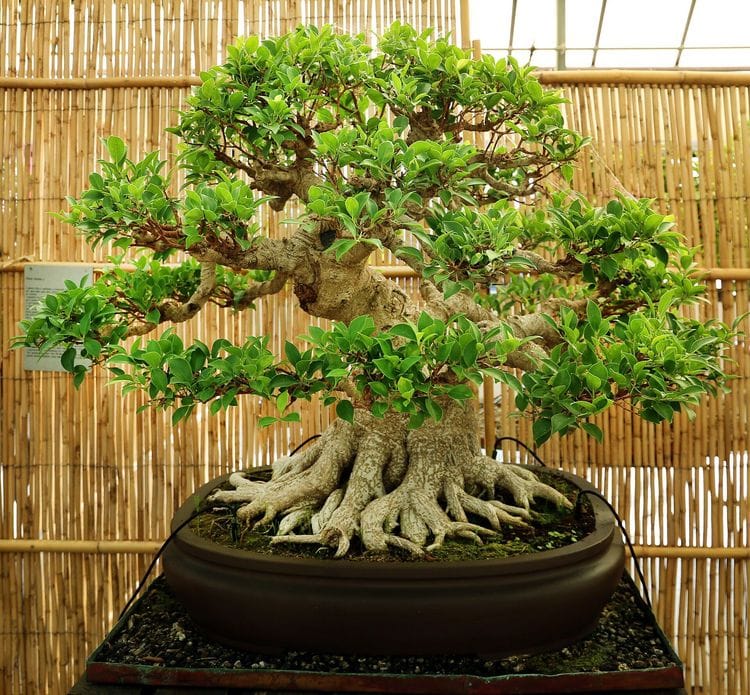
Photo: Sailko / Wikimedia Commons · CC BY-SA 4.0 Ficus retusa
Ficus microcarpa ‘Retusa’
BeginnerTropical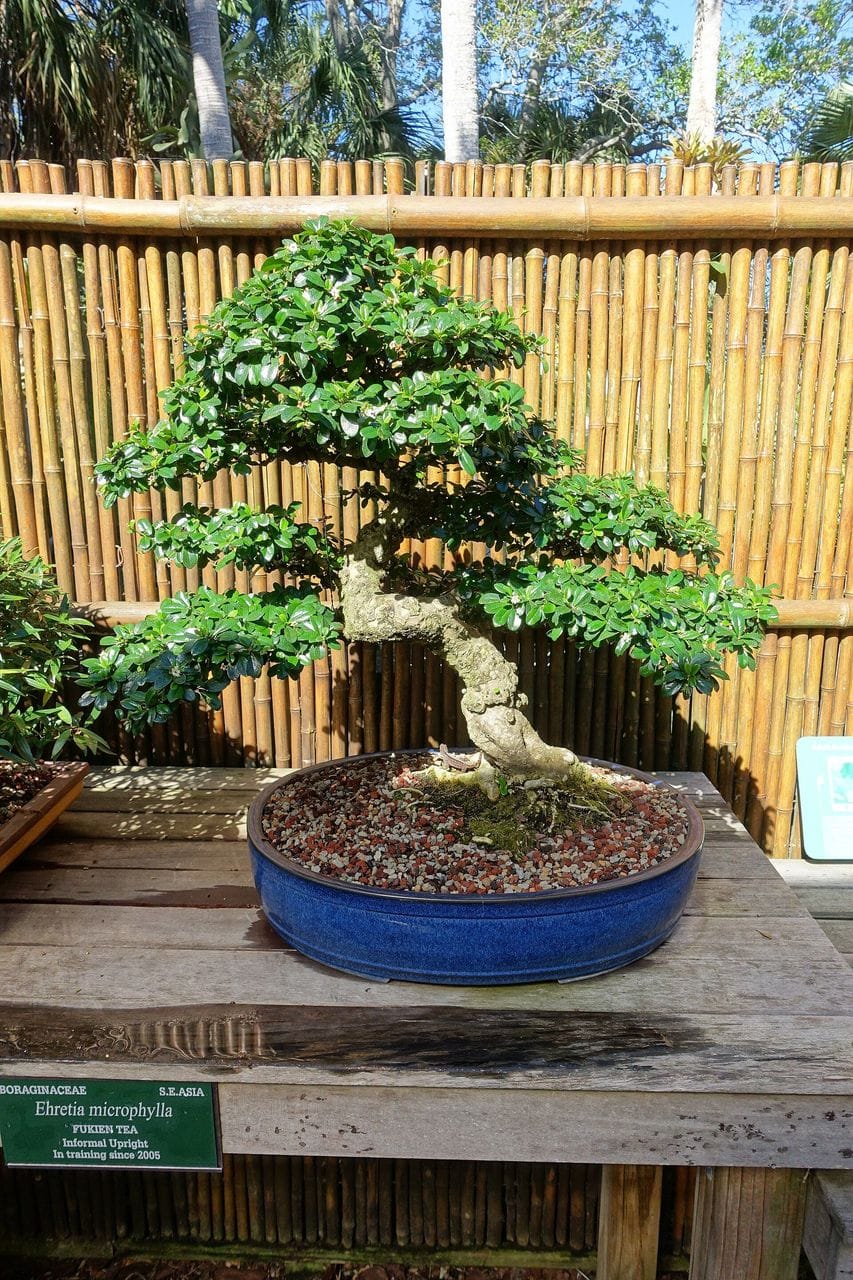
Photo: Daderot / Wikimedia Commons · CC0 Fukien tea
Carmona microphylla
AdvancedTropical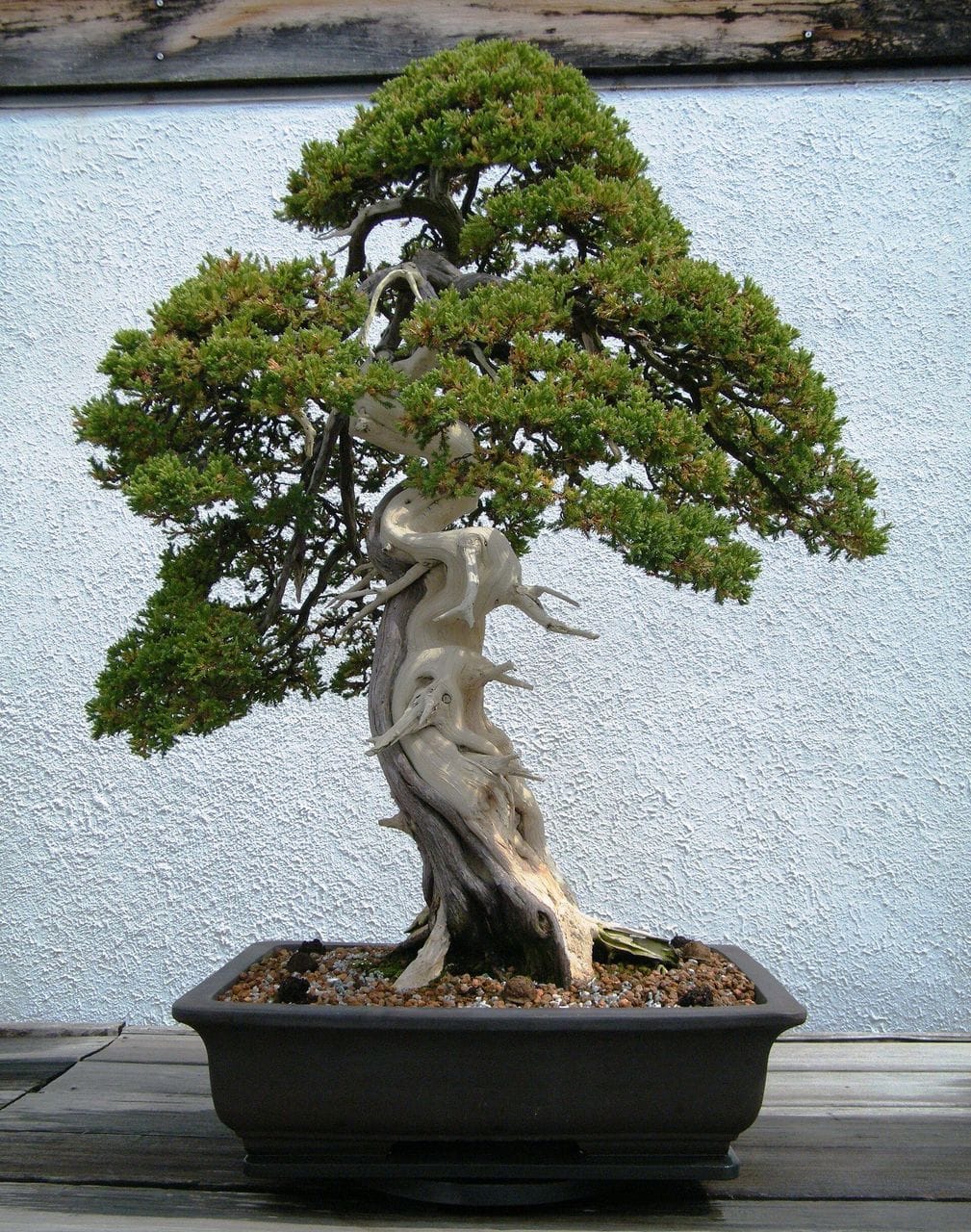
Photo: Sarah Stierch / Wikimedia Commons · CC BY 4.0 Juniper
Juniperus procumbens ‘Nana’
IntermediateTemperate


What you need
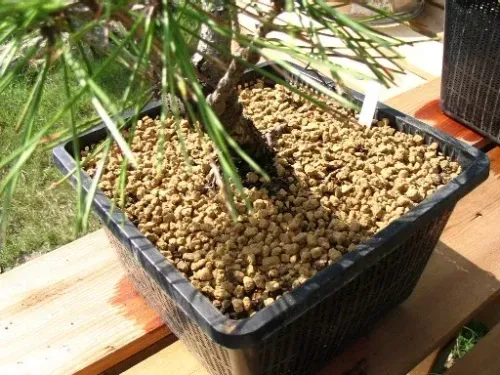
Photo: Globalist1789 / Wikimedia Commons · Public domain SoilHard-grade akadama · 2–5 mm
The base of nearly all our mixes: it holds water without waterlogging and changes colour as it dries.
- Grain
- 3–6 mm
- Mix
- 50–70 % with pumice
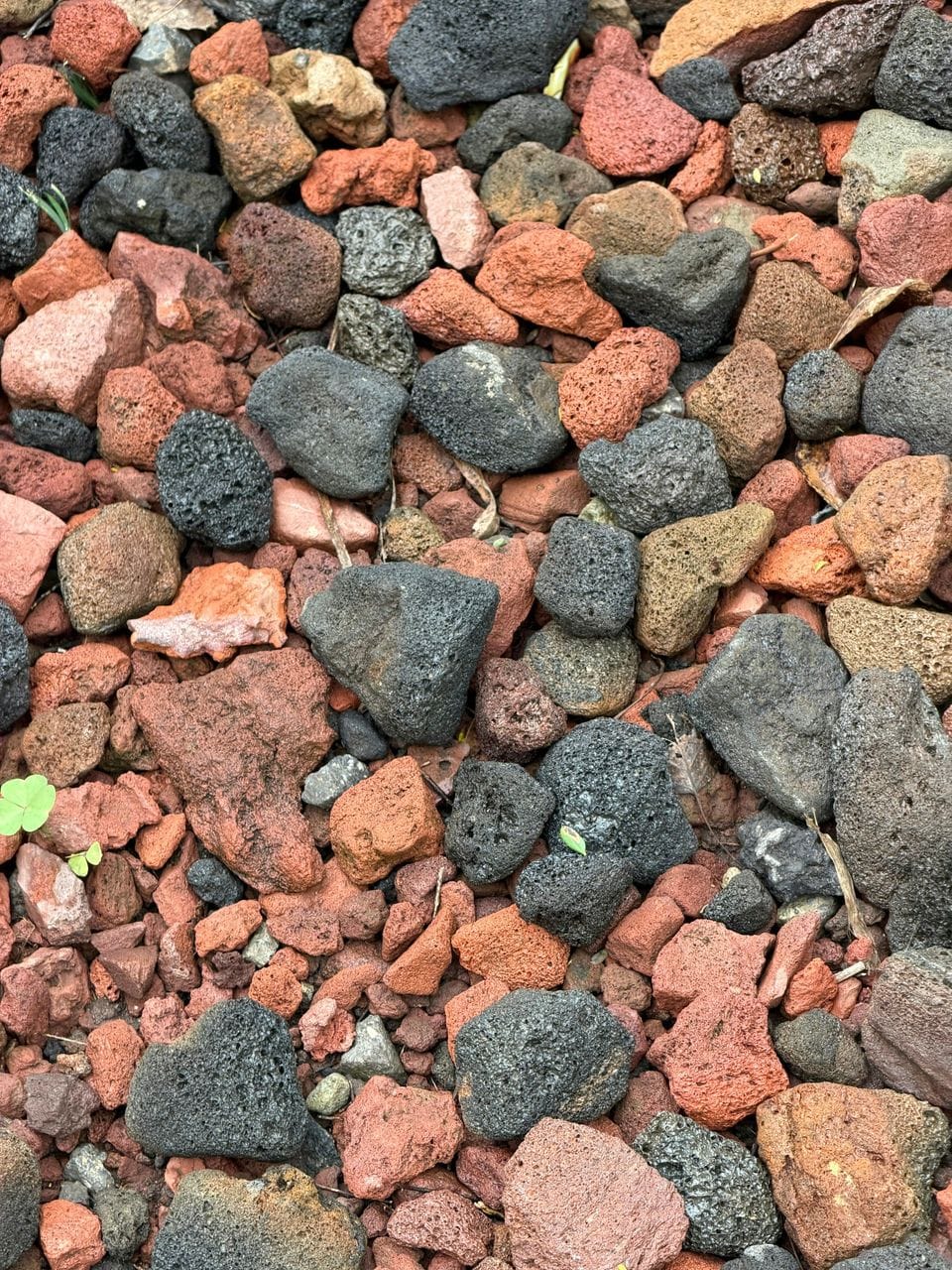
Photo: Pedro Vit / Unsplash · Unsplash License SoilLava rock · 3–8 mm
Adds structure and air to mixes for pines, junipers and olives. It does not break down over the years.
- Grain
- 3–8 mm
- For
- Conifers and Mediterranean species
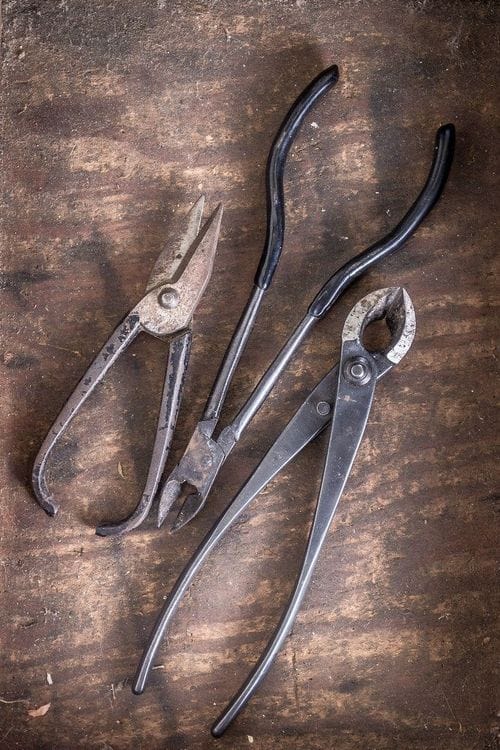
Photo: Cindy Shebley / Flickr · CC BY 2.0 ToolsSteel root cutter · 200 mm
Cuts thick roots and stumps when repotting without straining your concave cutter, which soil quickly blunts.
- For
- Thick roots and branches
- Use
- Repotting


- Soil
Pumice · 3–6 mm
Light, porous and stable: it brings drainage and air to the mix. The second base of nearly all our soils.
Grain3–6 mm · Mix20–50 %