
All year · 7 min
Watering: the mistake that kills most bonsai
Watering “a little every day” is the fastest way to rot the roots. Here is how to tell when it is time and how to do it right.
Very few bonsai die of thirst after one forgetful day. Most die slowly, from watering that feels careful: a little water every morning, always at the same time, whatever the weather. This guide explains why that habit rots the roots and how to replace it with something far more reliable: checking the soil before you water.
Why watering kills more bonsai than any pest
Roots do not only drink: they also breathe. There has to be air between the soil particles, because the fine roots that take up water and nutrients need oxygen to work. When the soil stays soaked for days, that air disappears, the fine roots suffocate and begin to rot. The treacherous part is that the symptoms look like thirst: the tree loses vigour, leaves yellow or drop, and the natural reaction is to water even more.
The opposite happens too, especially in summer and in small pots: a bonsai with little soil can dry out completely in one hot afternoon. That is why there is no universal schedule. What works is checking.
How to tell when it is time
Water when the top layer of soil starts to dry, not before. There are four simple ways to check, and in time you will use several at once without thinking:
- The skewer. Push a wooden skewer about two centimetres into the soil, away from the trunk. Pull it out after ten minutes: if it is dark and cool, there is still water; if it is dry, it is time.
- The colour. Akadama turns from dark brown (wet) to light brown (dry). It is one reason so many growers use it: the soil tells you.
- The weight. Lift the pot right after watering and again when you think it is dry. Within days your hand will feel the difference.
- The finger. Touch the surface and press a fingertip a centimetre in. If it is cool and slightly damp, wait.
Check daily, especially from spring to autumn, but water only when the tree needs it.
How to water well
When you water, water thoroughly. A shallow watering wets the top few centimetres and leaves the centre of the root ball dry, exactly where the most important roots are.
- Use a watering can with a fine rose or a hose on a shower setting. A strong jet washes the soil away and exposes the roots.
- Wet the whole surface of the pot, not just around the trunk.
- Water until it runs from the drainage holes, wait a minute or two and repeat. The second pass soaks the areas the first one missed and flushes out salts from the fertilizer.
- If water pools on the surface or is slow to soak in, the soil is compacted or full of roots. It is a sign that it is time to repot.
- If the root ball has dried out completely and water runs off down the sides, sink the pot in a bucket up to the rim for ten minutes.
The best time is early morning. In high summer a second round in the evening may be needed for small pots. Watering in full sun does not scorch the leaves, as people often say, but much of the water evaporates before it is used.
A rough guide by season
These figures are only a reference for a healthy tree, outdoors, in mineral soil, in a temperate climate. Your skewer has the final say.
| Season | Deciduous and conifers | Tropicals (ficus, Fukien tea) |
|---|---|---|
| Winter | Every 5–10 days; never when the soil is frozen | Under cover: every 4–7 days |
| Spring | Every 2–3 days, daily once it is in leaf | Every 2–3 days |
| Summer | Daily; twice in small pots | Daily |
| Autumn | Every 2–4 days | Every 3–4 days |
A small, shallow or unglazed clay pot dries out sooner. A freshly repotted tree drinks less because it has lost some of its roots. A tree in full sun and wind drinks far more than one in partial shade.
Soil decides half of the watering
With general potting compost it is almost impossible to water well: it holds water for days, compacts and lets no air through. That is why bonsai are grown in a granular mineral soil, where excess water drains away at once and the particles hold just the moisture the roots need.
| Component | Holds water | Adds air | What it is for |
|---|---|---|---|
| Akadama | High | Medium | Base of most mixes; changes colour as it dries |
| Pumice | Medium | High | Lightness and drainage; does not break down |
| Lava rock | Low | Very high | Drainage and structure, especially for conifers |
| Kanuma | High | Medium | Azaleas and other acid-loving species |
A common mix for deciduous trees is 60% akadama, 20% pumice and 20% lava, always sifted to remove the dust. With good soil it is hard to overwater: anything extra drains out of the bottom.
Which water to use
Tap water is fine for almost every species. In hard-water areas white lime crusts appear on the pot and the soil surface over time; they are not serious, but it is worth repotting on schedule to renew the mix.
The exceptions are acid-loving species such as satsuki azalea: with hard water their leaves yellow between the veins. For them, use rainwater whenever you can, or give an occasional dose of iron chelate. Leaving water to stand overnight removes chlorine, but not lime.
Summer: the riskiest time
From June to September a bonsai in a small pot can go from wet to dry in a few hours. To reduce the risk:
- Give afternoon shade above 32 °C, especially to maples and azaleas.
- Group the trees together: they shelter each other from wind and sun.
- Stand pots on a surface that does not store heat. A concrete slab in the sun heats the roots from below.
- Check morning and evening.
Humidity trays with gravel add little humidity to the air outdoors, but they do keep the base of the pot cooler and catch the run-off. Indoors in winter, they make a real difference for tropicals.
Winter: less water, not none
In winter deciduous trees are bare and drink very little, but the roots are still alive. Soil that dries out completely in January kills them just as it would in August. Water on frost-free days, around midday, when the soil starts to dry.
Tropical species such as ficus retusa or Fukien tea spend the winter under cover once nights drop below 12 °C. With the heating on, the air and the soil both dry quickly: check every two or three days and mist the leaves if they look dull.
If you go on holiday
- One week: water thoroughly, move the tree into shade and group the pots on a tray with a finger of water and gravel, so the pots do not sit in the water.
- Two weeks or more: find someone to water. Show them the skewer trick and leave a note with the rough frequency.
- Automatic drippers work well if you test them at home for a few days first; a blocked dripper in August is bad news.
Signs that something is wrong
| Symptom | Too much water | Too little water |
|---|---|---|
| Leaves | Yellow and drop, often the inner ones first | Curl and dry from the edges |
| New shoots | Weak and pale | Droop and wilt |
| Soil | Always dark, with algae or bright green moss | Pale, shrinks from the pot wall |
| Roots | Dark, soft, smelling of rot | Dry and brittle |
If you suspect root rot, stop watering until the soil dries and check the roots in spring. A tree with damaged roots should not be fed until it is pushing strong new growth again.
The most common mistakes
- Watering by the calendar. A cloudy day in April has nothing in common with a day in August.
- Watering a spoonful "to be safe". The centre of the root ball stays dry and salts build up.
- Leaving water in the saucer. The base of the pot stays permanently waterlogged.
- Using garden soil or potting compost. It compacts and suffocates the roots.
- Bringing an outdoor bonsai inside "to look after it better". Most watering problems start there.
With mineral soil, a pot that drains well and the habit of looking before you water, watering stops being the great enemy. From there, each species profile will tell you its particular needs.
Species this applies to


What you need
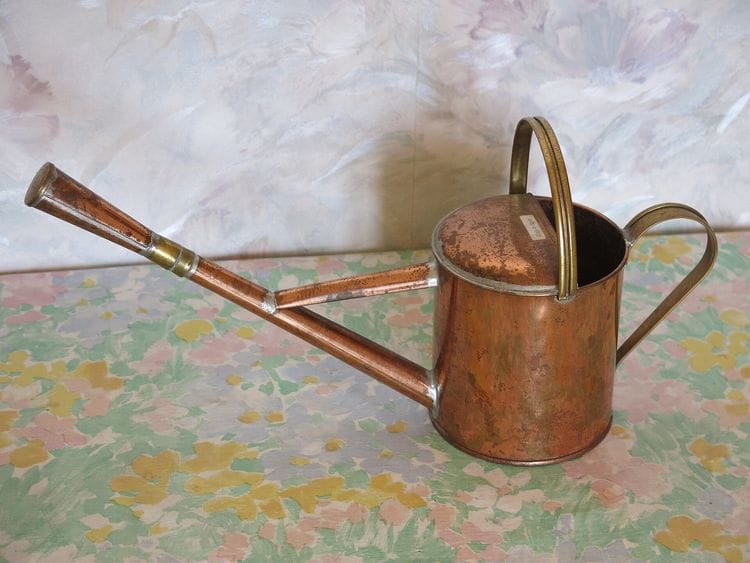
Photo: Tangopaso / Wikimedia Commons · Public domain WateringWatering can with fine rose
A fine shower soaks the soil without washing it away or lifting the moss.
- Capacity
- 1–2 L
- Use
- Daily watering

Photo: Vitaly Gariev / Unsplash · Unsplash License WateringBrass mister with fine nozzle
Humidity for tropicals while they overwinter indoors, when central heating dries the air.
- Capacity
- 500 ml
- Use
- Tropicals in winter
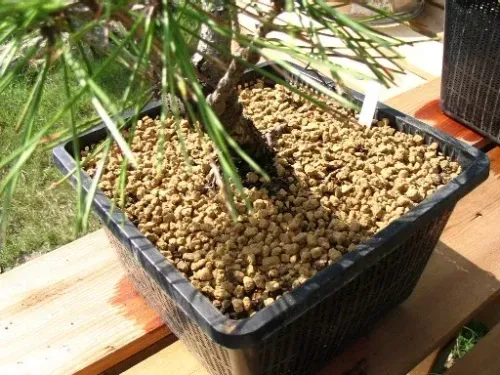
Photo: Globalist1789 / Wikimedia Commons · Public domain SoilHard-grade akadama · 2–5 mm
The base of nearly all our mixes: it holds water without waterlogging and changes colour as it dries.
- Grain
- 3–6 mm
- Mix
- 50–70 % with pumice


- Watering
Humidity tray with gravel
Raises humidity around tropicals while they overwinter indoors, without waterlogging the pot.
ForTropicals in winter · UseWith gravel and water