Pine drying out
Old needles falling in autumn are normal. The rest is not: watering, drought, shade, roots or processionary. And beware: a pine can be dead and still green.
When a pine bonsai, such as a Japanese black pine or a Scots pine, turns yellow or brown, the worry is justified: conifers give little early warning. First, tell what is normal from what is not.
First: what is normal
Every autumn, pines shed their oldest needles, two or three years old, from the inside of the branches. They yellow and fall while the tips stay green. If the needles changing colour are on the inside and the new ones are healthy, all is well: pull the old ones off by hand to let the light in.
When it is not normal
- Overwatering and damaged roots. Needles turn pale and then brown, starting at the branch tips.
- Drought. One hot day with a dry pot is enough to burn the current year’s needles.
- Too little sun. A pine in shade or indoors weakens gradually.
- Repotting with too much root pruning, or roots washed completely clean, without the mycorrhizae they need.
- Pine processionary. The caterpillars eat the needles; you will see silk nests at the tips in winter.
Careful: a pine can be dead and still green
Conifers keep their green colour for weeks, sometimes months, after dying. Do not rely on colour alone:
- Scratch the bark of a thin branch: green and moist underneath means alive.
- Feel the buds at the tips: firm is a good sign; dry or hollow is not.
- Bend a twig: a living one is flexible, a dead one snaps.
What to do
- Put it in full sun, outdoors, sheltered from strong wind.
- Water only when the soil starts to dry; a damaged pine drinks little.
- Do not prune or repot until you see firm new buds.
- Remove processionary nests wearing gloves and goggles: the caterpillar hairs are highly irritating, for dogs and cats too.
How to stop it coming back
Full sun all year, very free-draining soil (more pumice and lava than akadama) and repotting that keeps some of the old soil. If you suspect a root problem, see the root rot page.


What you need
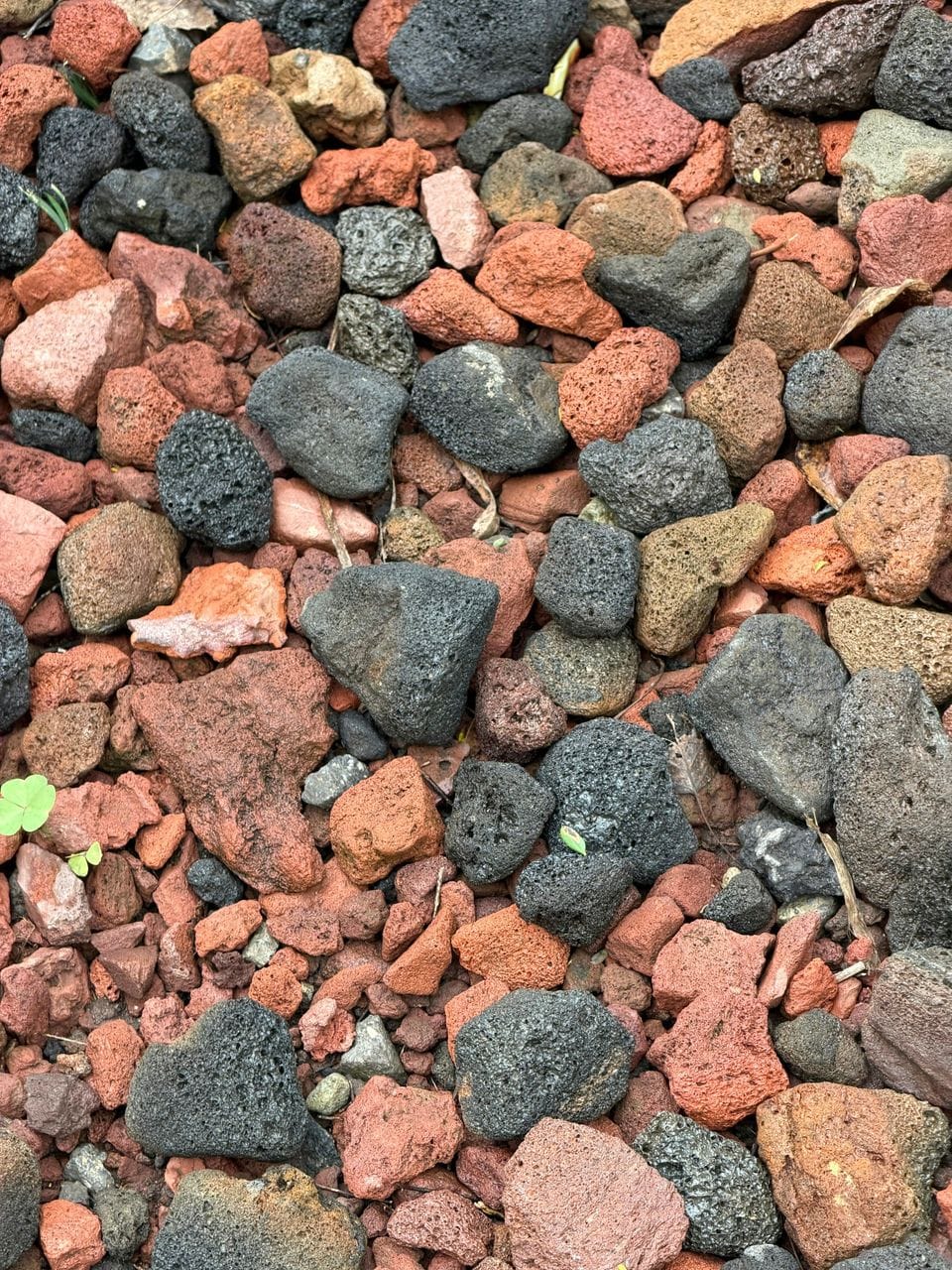
Photo: Pedro Vit / Unsplash · Unsplash License SoilLava rock · 3–8 mm
Adds structure and air to mixes for pines, junipers and olives. It does not break down over the years.
- Grain
- 3–8 mm
- For
- Conifers and Mediterranean species

- Soil
Pumice · 3–6 mm
Light, porous and stable: it brings drainage and air to the mix. The second base of nearly all our soils.
Grain3–6 mm · Mix20–50 %