
All year · 3 min
What a bonsai means: symbolism and origins
What the word bonsai means, what it represents in the Japanese tradition and what each species is associated with.
The word bonsai (盆栽) joins two characters: bon, a tray or shallow container, and sai, to plant or grow. It literally means “planted in a tray”. Behind that simple name lie more than a thousand years of history and a very particular way of looking at trees.
Where it comes from
It began in China, where miniature trees and landscapes, penjing, were grown more than a thousand years ago. The practice reached Japan, where Buddhist monks and the aristocracy refined it into the bonsai we know: a single tree in a pot that sums up the form of an old tree in nature. We tell the story in more detail in the history of bonsai.
What it represents
In the Japanese tradition, a bonsai is neither a decorative plant nor a naturally dwarf tree: it is an ordinary tree, of a species that would be large in the wild, kept small by pruning, wiring and a small pot. The aim is to evoke an old tree: a trunk wide at the base, a nebari gripping the ground, branches lowered by the weight of years.
That is why it is associated with ideas such as:
- Patience, because a good bonsai takes years, sometimes decades, to develop.
- Harmony between the human hand and nature: the grower guides the tree, but the tree has the last word.
- Permanence and continuity, because a well-kept bonsai can outlive the person who started it and pass from one generation to the next.
- Attention to the moment, because each season changes the tree and asks for something different.
What each species is said to mean
In popular culture, especially in the West, meanings are attached to particular species. They are symbolic associations rather than fixed traditions, but they help when choosing a gift with intent:
| Species | Associated with | Why |
|---|---|---|
| Olive | Peace, resilience | An ancient Mediterranean symbol that buds back even from old wood |
| Pine | Longevity, steadfastness | Evergreen and able to live for centuries |
| Ficus | Abundance, unity | Its vigorous growth and aerial roots that fuse with the trunk |
| Japanese maple | Change, the beauty of each season | Its colour shifts from spring to autumn |
| Azalea | Celebration, delicacy | Its explosive, brief flowering |
| Juniper | Strength in adversity | The deadwood on its trunk tells of years of wind and snow |
What about feng shui?
You will often find advice on where to place a bonsai to attract good luck. These are popular beliefs with no basis in the Japanese bonsai tradition. If you want a bonsai to bring something good to a home, the best advice is practical: put it where it gets the light its species needs. A healthy, well-placed tree brings more calm than any symbolic location.
Is it a good gift?
Yes, on one condition: that the species fits the recipient’s life. Our guide to giving a bonsai explains how to choose one and what to tell the recipient so it lasts for years. And if you are drawn to the aesthetics, the classic styles show how each trunk shape tells a different story.
Species this applies to
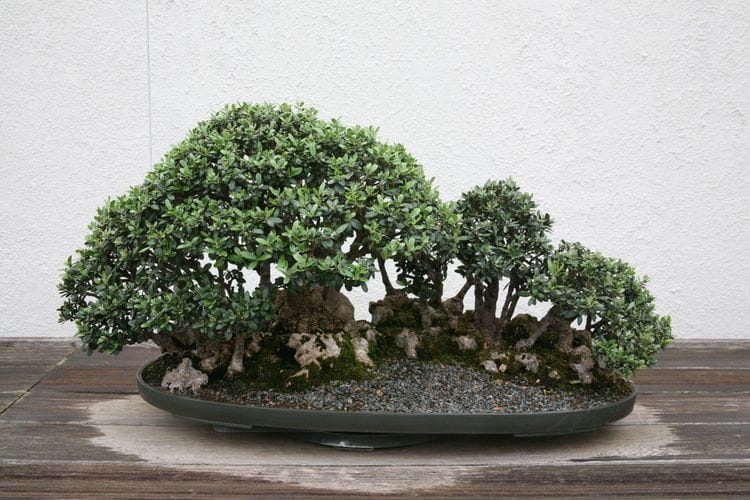
Photo: Cliff from Arlington, Virginia, USA / Wikimedia Commons · CC BY 2.0 Olive
Olea europaea
BeginnerTemperate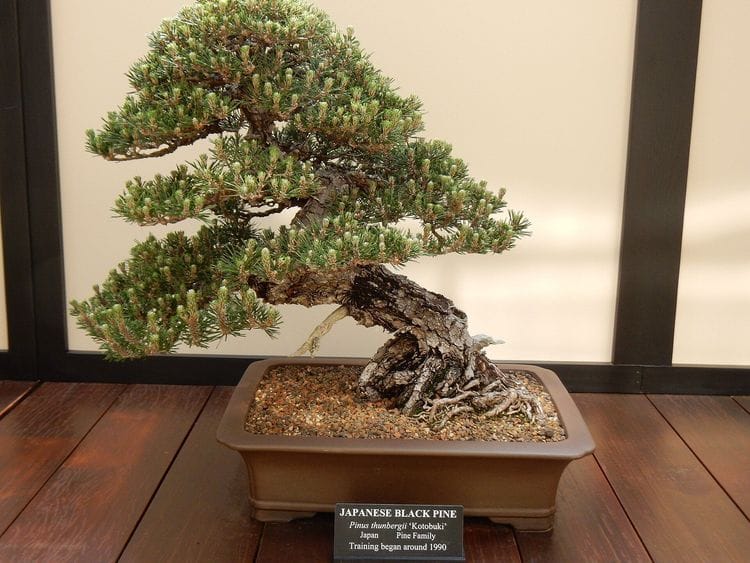
Photo: Shuvaev / Wikimedia Commons · CC BY 4.0 Japanese black pine
Pinus thunbergii
AdvancedTemperate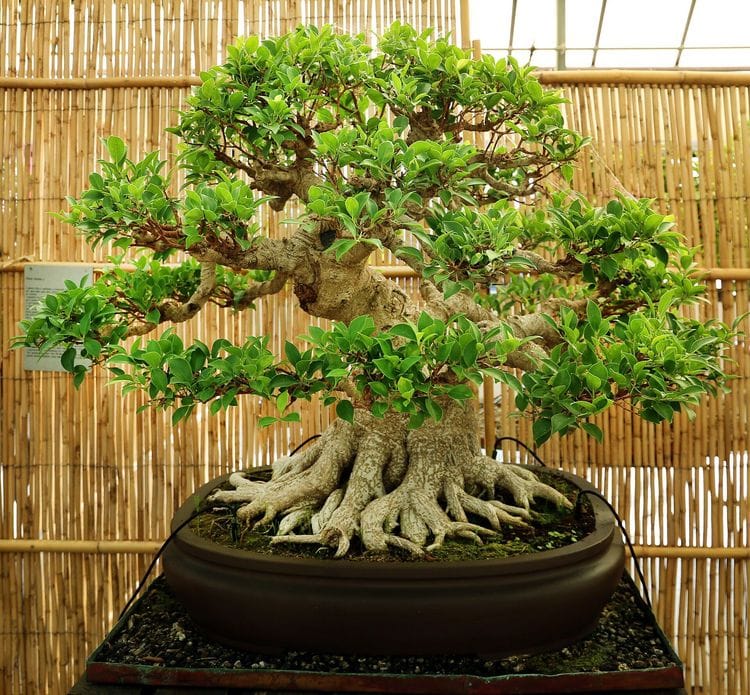
Photo: Sailko / Wikimedia Commons · CC BY-SA 4.0 Ficus retusa
Ficus microcarpa ‘Retusa’
BeginnerTropical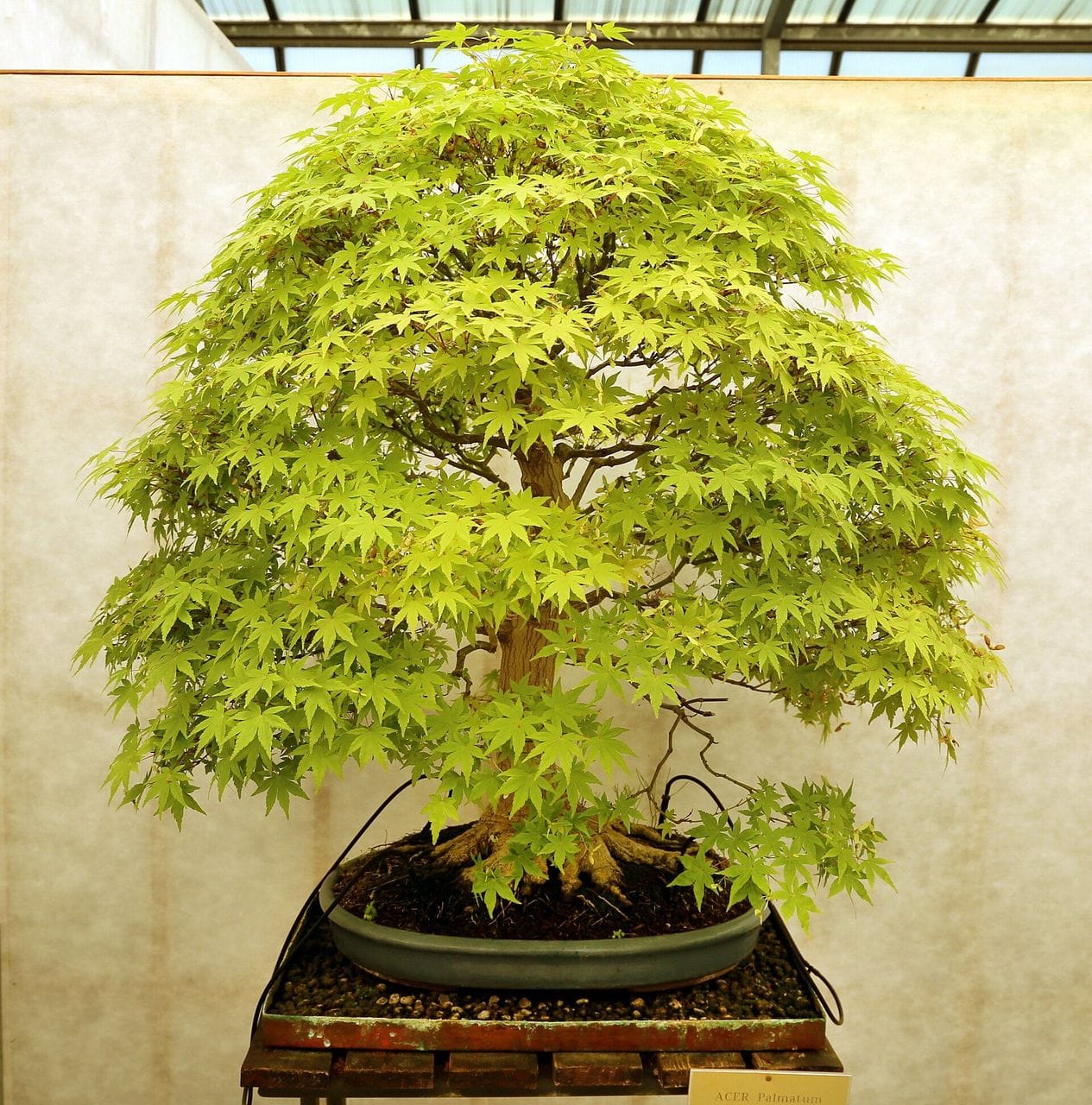
Photo: Sailko / Wikimedia Commons · CC BY-SA 4.0 Japanese maple
Acer palmatum
IntermediateTemperate


