
Temperate · Conifer
Chinese juniper (shimpaku)
Juniperus chinensis · Cupressaceae
真柏 · shimpaku
The juniper of the great Japanese bonsai: scale foliage, bleached deadwood and a flexibility that allows dramatic bends.
Quick care facts
- Light
- Full sunOutdoors all year. Without direct sun the inner foliage dies back and weakens.
- Watering
- Moderate; mist in summerLet the surface dry between waterings. In summer it enjoys a misting of the foliage in the evening.
- Soil
- Akadama 30 · pumice 35 · lava 35Very free-draining, like other conifers.
- Feeding
- March to OctoberSolid organic fertilizer. A strong tree is the condition for working it.
- Pruning
- Trim with scissors, do not pinchCut protruding shoots with fine scissors, always leaving green on every branch. Constant finger pinching weakens it.
- Repotting
- Every 3–4 yearsIn early spring. Moderate root pruning.
- Difficulty
- Intermediate
- Climate
- HardyTakes frost. In a pot, protect the roots below −10 °C.
About the species
The Chinese juniper, and above all its mountain form shimpaku (such as the famous cultivar ‘Itoigawa’), is the species behind the most dramatic bonsai: twisting trunks with live veins rising between bleached deadwood, the jin and shari. Its dense, bright green scale foliage is worked into sharply defined pads.
Its young wood is so flexible that it takes strong bends with wire, and deadwood treated with lime sulphur lasts for decades. It is an outdoor, full-sun species, more demanding than procumbens juniper but with much more potential.
Yearly calendar
What to do each month. In warm climates, bring spring tasks forward by about three weeks.
| Task | J | F | M | A | M | J | J | A | S | O | nowN | D |
|---|---|---|---|---|---|---|---|---|---|---|---|---|
| Feeding | ✓ | ✓ | ✓ | ✓ | ✓ | ✓ | ✓ | ✓ | ||||
| Pruning | ✓ | ✓ | ✓ | ✓ | ✓ | ✓ | ||||||
| Repotting | ✓ | ✓ | ||||||||||
| Wiring | ✓ | ✓ | ✓ | ✓ | ✓ | ✓ | ||||||
| Pest control | ✓ | ✓ | ✓ |
Calendar for the northern hemisphere.
Common problems
SymptomNeedle foliage appears instead of scales
Juvenile foliage from stress: over-pruning, low light or damaged roots. More sun, no pruning for a season and regular feeding.
PestDull foliage with yellow specks and fine webbing
Spider mites, common in dry summers. Mist the foliage daily and use a miticide if they persist.
DiseaseOrange jelly-like growths on the branches in spring
Pear rust (Gymnosporangium), which alternates between junipers and pear trees. Cut out affected branches and keep the tree away from pears.
Seeing a different symptom?Diagnose by symptom
What we use with Chinese juniper (shimpaku)
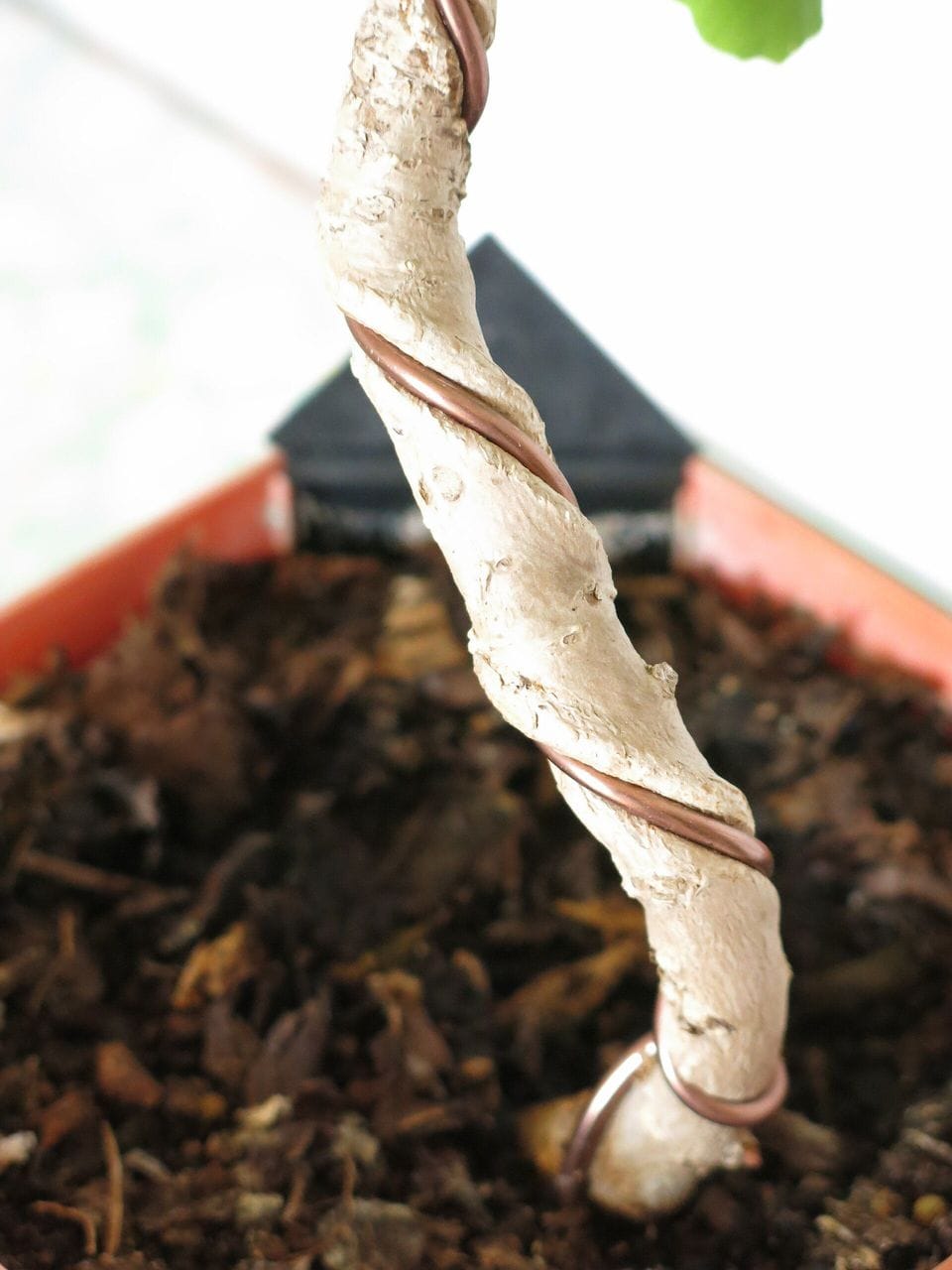
Photo: Tangopaso / Wikimedia Commons · Public domain WiringAnodized aluminium wire · several gauges
Soft and easy to remove. A 1 to 4 mm set covers nearly every branch of a young tree.
- Gauges
- 1 · 1.5 · 2 · 3 · 4 mm
- Use
- Deciduous and conifers
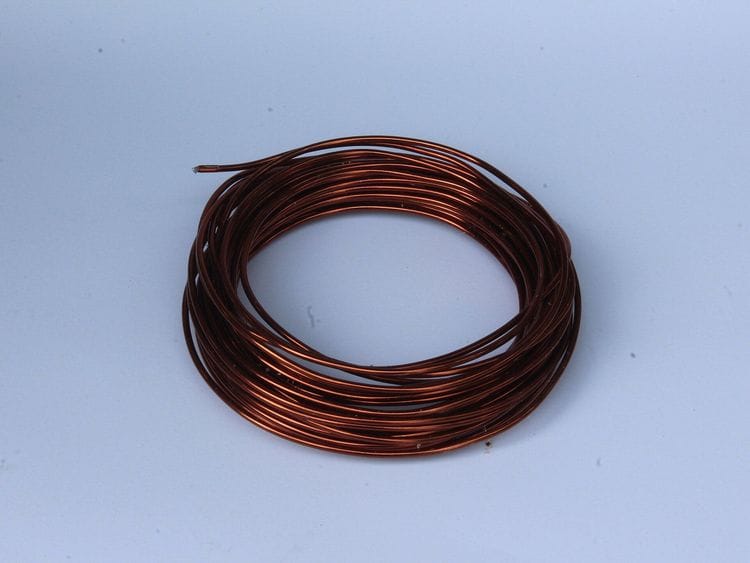
Photo: Hinnerk11 / Wikimedia Commons · CC BY-SA 4.0 WiringAnnealed copper wire
Holds more with less thickness than aluminium. The classic for pines and junipers, though it takes a little more practice.
- Gauges
- 1–4 mm
- Use
- Conifers
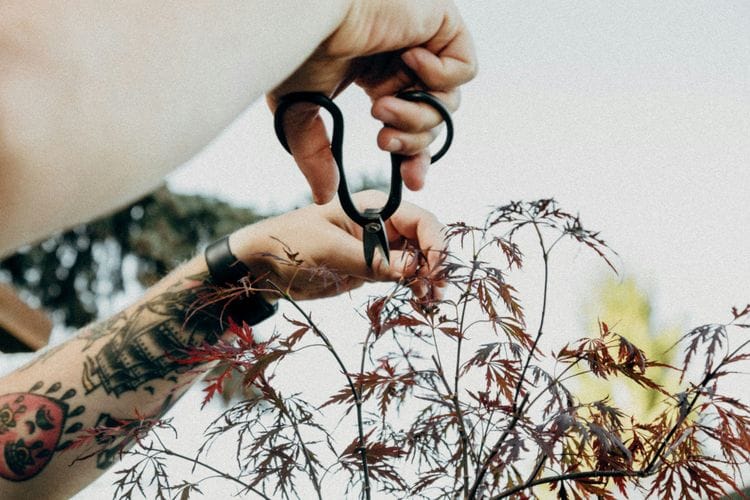
Photo: Priscilla Du Preez / Unsplash · Unsplash License ToolsLong-handle bonsai scissors
For pinching and trimming fine shoots inside a dense canopy without damaging nearby leaves.
- For
- Shoots and leaves
- Level
- All
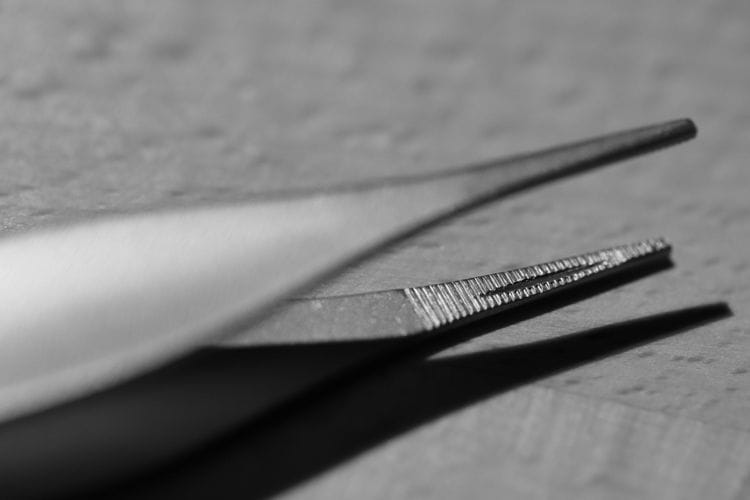
Photo: Joachim Schnürle / Unsplash · Unsplash License ToolsTweezers with repotting spatula
Tweezers for plucking needles and removing dead leaves; the spatula end smooths the soil and places moss.
- Length
- ~200 mm
- Use
- Plucking, moss, cleaning


