
Buying guide · 3 min
Concave cutters: how to choose your first
The tool that matters most in bonsai: which steel, which size and which details to check so it cuts cleanly for years.
If you are only going to buy one bonsai tool, make it a concave cutter. It makes the cut that separates a bonsai from a pruned shrub: a slightly hollow cut that heals flush with the trunk instead of leaving a stub. This guide explains what to look for and what is not worth paying for.
Why a concave cutter and not secateurs
Secateurs cut flat and always leave a small stub. On a garden tree that does not matter; on a bonsai, the stub swells as it heals and forms a bump that shows for years. A concave cutter has curved blades and cuts a shallow bowl: the wood grows in from the edges and the wound closes flat.
What to look for
| Feature | What to look for | Why |
|---|---|---|
| Material | Carbon steel or good-quality stainless steel | Soft steel chips on the first hard branch |
| Size | 180–210 mm to start | Handles branches up to 10–12 mm; 300 mm tools are for large trees |
| Blades | They close completely, with no light between them | Blades that do not meet crush the bark instead of cutting |
| Joint | Firm, with no sideways play | With play, the blades spread apart as you squeeze |
| Spring | Smooth and secure | A stiff spring tires your hand in a long session |
Carbon steel or stainless
- Carbon steel: cuts very well and costs less for the same quality, but rusts if you do not dry and oil it after use. It is the standard for traditional Japanese tools.
- Stainless steel: more expensive, almost maintenance-free. A good choice if you work outdoors and forget to clean.
To start, a good 205 mm carbon steel cutter is the most sensible buy.
What is not worth it
- Very cheap 15-piece kits. They usually contain soft steel tools that chip quickly. One good concave cutter and a pair of scissors beat ten mediocre pieces.
- Extreme sizes. A 300 mm cutter is useless on fine branches, and a pocket-sized one will not cut real branches.
- Paying for the brand on your first tool: a well-kept mid-range cutter lasts for years.
How to look after it
- Clean it after each use to remove sap.
- Dry it well and put a few drops of oil (camellia or machine oil) on the blades and joint.
- Do not use it on wire or on roots full of grit: that is what wire cutters and root cutters are for.
- If it stops cutting cleanly, sharpen it on a fine stone following the original angle, or have it sharpened.
What to buy next
Once you have the cutter, the next step is a pair of long-handled scissors for pinching and trimming shoots, and wire cutters when you start wiring. If you are unsure where to start, see the starter kit by budget.
What you need
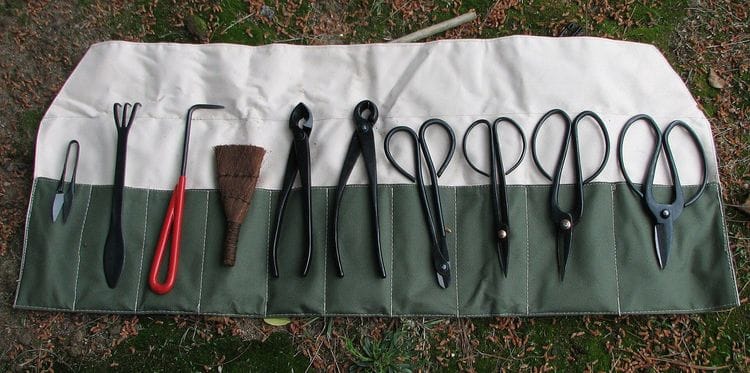
Photo: Ragesoss / Wikimedia Commons · CC BY-SA 3.0 ToolsCarbon steel concave cutter · 205 mm
Its curved blades cut the branch flush with the trunk. If you buy just one tool, make it this one.
- For
- Branches up to 12 mm
- Level
- All
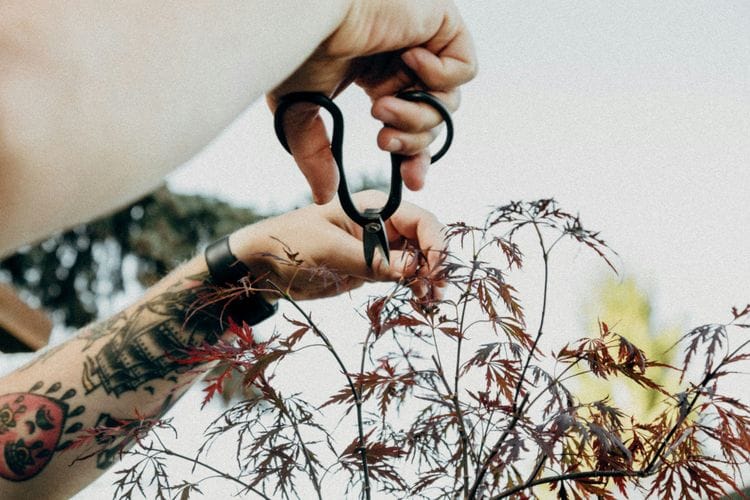
Photo: Priscilla Du Preez / Unsplash · Unsplash License ToolsLong-handle bonsai scissors
For pinching and trimming fine shoots inside a dense canopy without damaging nearby leaves.
- For
- Shoots and leaves
- Level
- All
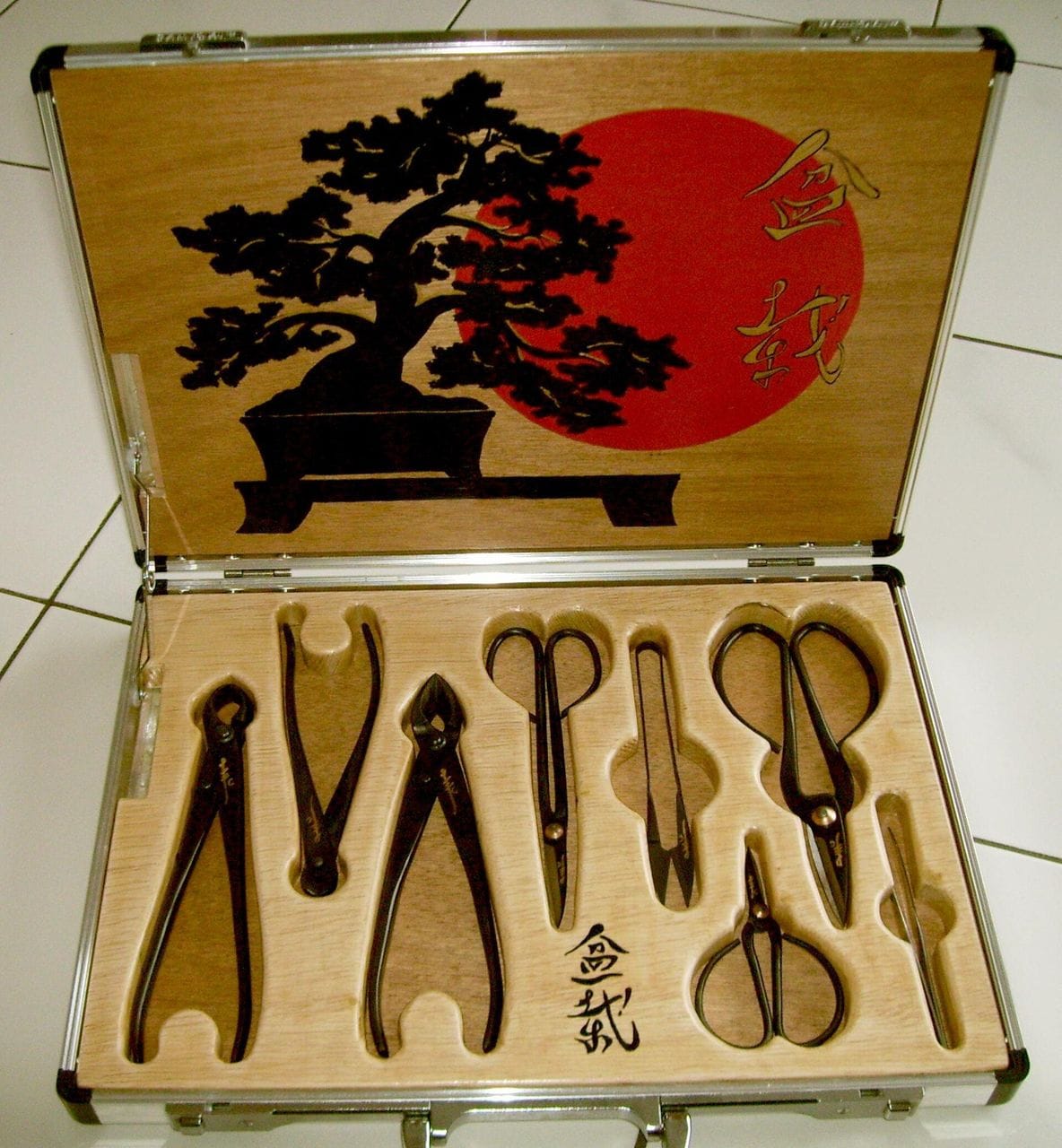
Photo: Edward Cwik / Wikimedia Commons · CC BY-SA 3.0 ToolsStarter tool kit
Concave cutter, scissors, wire cutter, tweezers and rake in a case. Cheaper than buying the pieces one by one when you start.
- Includes
- 5 tools + case
- Level
- Beginner


