Buying guide · 2 min
Where to buy akadama and other bonsai soil
Specialist shops, Amazon, big stores or clubs: where to find akadama, what to check on the bag and what to use if you cannot find it.
Akadama is the base of almost every bonsai mix, but not every shop stocks it and quality varies a lot. This guide covers where to buy it, what to check and how much you need, along with the other soil components.
Where to find it
| Where | Pros | Cons |
|---|---|---|
| Specialist bonsai shops, in person or online | The best quality and range: hard akadama, several grades, kanuma, kiryu | Shipping costs because of the weight |
| Amazon | Convenient, fast delivery and other buyers’ reviews | You have to check quality and bag size carefully |
| Big stores and garden centres | You can see the bag before buying | Little choice; often small bags that are expensive per litre |
| Bonsai clubs and societies | Group orders at good prices and advice from experienced growers | You need to join or wait for an order |
For a beginner, the most practical option is usually to buy a 14 L bag of hard akadama and a bag of pumice online, which will cover several repottings. Our soil buying guide lists the brands and formats we recommend.
What to check on the bag
- Hard grade. It takes longest to break down. It is usually labelled “hard quality” or double-fired.
- Particle size. For small and medium trees, 2–6 mm. Fine grade is for cuttings and very small trees.
- Little dust. Shake the bag: if it sounds like fine sand rather than grains, you will have a lot of sifting to do.
- Price per litre, not per bag. A 2 L bag can cost almost as much as a 14 L one.
- That it is really akadama. Some “bonsai soil” mixes contain peat and only a little akadama.
How much you need
It depends on the pot size and your species’ mix. A medium 30 × 22 × 7 cm pot takes about 5 litres of soil. Work it out exactly with our soil calculator: give it the pot measurements and type of tree and it tells you the litres of each component.
If you cannot find akadama
You can grow bonsai without it. An equal mix of pumice and lava rock, with 10–20% fine composted pine bark, works very well, especially in rainy climates. For azaleas and other acid lovers, the alternative is kanuma. What does not work is expanded clay pebbles, peat or general potting compost: we explain why in soil types.
The other components
- Pumice: easier to find, including in cactus and succulent shops.
- Lava rock (scoria): at nurseries and garden centres, sometimes sold as decorative gravel. Check it is not painted or treated.
- Kanuma: only at specialist shops.
Sift each component before mixing to remove the dust. It is the single step that most improves drainage.


What you need
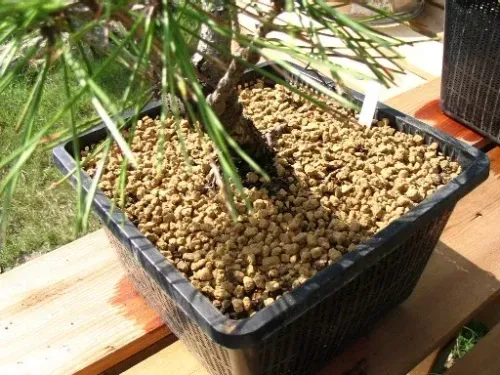
Photo: Globalist1789 / Wikimedia Commons · Public domain SoilHard-grade akadama · 2–5 mm
The base of nearly all our mixes: it holds water without waterlogging and changes colour as it dries.
- Grain
- 3–6 mm
- Mix
- 50–70 % with pumice
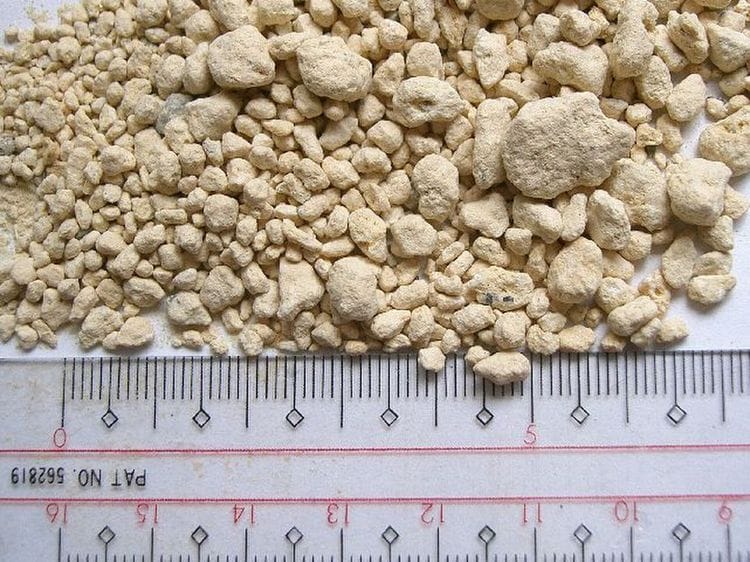
Photo: KENPEI / Wikimedia Commons · CC BY-SA 3.0 SoilHard-grade kanuma · 2–5 mm
Acidic Japanese substrate for azaleas and other acid lovers. Without it, satsukis turn yellow.
- pH
- Acidic
- For
- Azaleas, rhododendrons
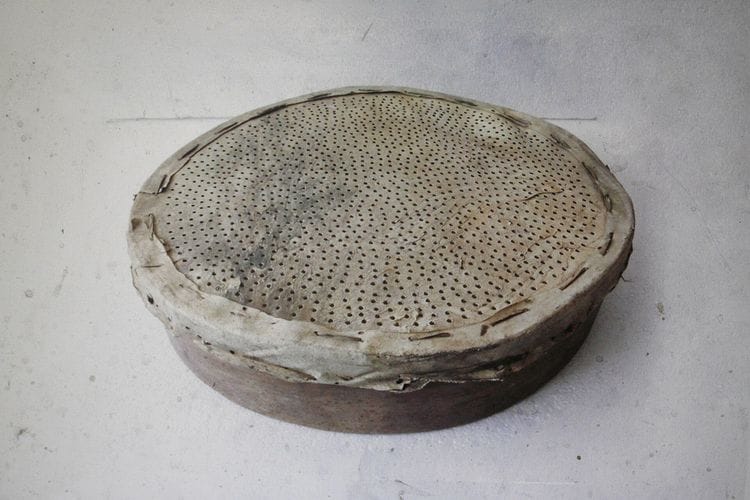
Photo: Toltecitztli / Wikimedia Commons · CC BY-SA 4.0 SoilSoil sieve set
Sifting out the dust is what improves drainage most. A set of three meshes lasts for years.
- Meshes
- 1.5 · 3 · 6 mm
- Use
- Before each repotting


- Soil
Pumice · 3–6 mm
Light, porous and stable: it brings drainage and air to the mix. The second base of nearly all our soils.
Grain3–6 mm · Mix20–50 %